By Army Staff Sgt. John Zumer Task Force Duke KHOST PROVINCE, Afghanistan, March 17, 2011 - His reasons for joining the Army are ones frequently heard from countless other soldiers: being inspired by a close relative and the chance to find himself and see some of the world.
Montgomery, a native of the small town of Many, La., is a 1st Infantry Division infantryman and squad leader attached to 2nd Platoon, Company D, 1st Battalion, 26th Infantry Regiment, 3rd Brigade Combat Team, Task Force Duke. His platoon, popularly known as "The Dragoons," is based at Combat Outpost Narizah when they're not out on patrol. Unfortunately for anyone desiring a laid-back deployment, however, the Dragoons aren't in the habit of idly sitting at their outpost and watching the days go by. Such an action-packed infantry life is fine with Montgomery, though. He picked his military occupational specialty because the challenge and the physical aspects of the job intrigued him. He also had an up-close-and-personal view of Army life through his father's military service, he said. "I just wanted to do something," he added. "College wasn't working." After almost five years of Army service, Montgomery said he's leaning toward making the military a career, though ultimately, any decision will be made with his wife, Briana, a supply soldier at Fort Knox, Ky. The dual-military couple must balance responsibilities with caring for their 7-month-old daughter, Aubrey. Civilian life will have to wait, Montgomery said, but that doesn't mean he isn't already looking ahead to the next stage of his life. He's considering a career with either the Drug Enforcement Agency or the FBI after his Army service. For now though, that potential future is on hold. His daily responsibilities of providing a safer, more secure Afghanistan take precedence. Some of his fellow soldiers are glad Montgomery's future civilian exploits are on the back burner and lay far ahead, because for them, the present is where he's most valuable. "[He's] one of the best soldiers I've ever worked with," said Army Spc. Abram Sandoval, an infantryman from Phoenix who is a member of Montgomery's squad. He added that Montgomery's invaluable experience "helps you think to be two steps ahead of the enemy." The Dragoons spend most days on an aggressive rotation of combat patrols. Regular visits to nearby villages are designed to not only improve security but foster greater understanding and friendships with local residents. Even on days when not patrolling, however, they're busy performing security and other necessary tasks. So far, this tour has been a far cry from Montgomery's last 12-month deployment to Afghanistan with Task Force Duke, which he spent in the notoriously volatile Korengal Valley of Kunar province. That isolated, mountainous region on the eastern border with Pakistan, filled with caves and canyons, was the scene of near-daily exchanges of fire between NATO forces and insurgents, who used the valley to filter weapons and fighters into Afghanistan. Coalition forces since have realigned, focusing on protecting Afghan population centers. This newer emphasis of helping Afghans learn to help themselves in the Task Force Duke area of operations, rather than the constant violence he had been accustomed to in the Korengal Valley, is a welcome change of pace for Montgomery. "We got in fire fights every day," he said, recounting the daily perils of his last deployment. And just as competition for athletes often is secondary to the months of preparation and training, Montgomery noted, training and building unit cohesion are essential long before soldiers reach the battlefield. That's why teamwork holds a special place of importance for him. "It's the most important thing you do," he said. "You can't do everything by yourself." Montgomery is responsible for nine other soldiers. He conducts monthly counseling sessions, maintains accountability of equipment and personnel, and provides daily supervision on combat patrols. But his infantry-specific skills are most important on this deployment, he said, and his job would be a lot harder if not for the people he works with and the training beforehand. Montgomery credits his team's month-long tour at the National Training Center in August with getting him and his troops ready for the current deployment. The center at Fort Irwin, Calif., is a large-scale training facility designed to get units ready to go into combat. "You learn what's new in Afghanistan since you had been in garrison, [and it's] good for the new guys," he said. Montgomery said the most important advice he dispenses to soldiers on their first deployment may seem partly misguided, but other veterans may agree. "Don't think about home, as hard as that may be," he said. "Stay focused on your job and do the right thing." Still, as a combat veteran with two deployments to his credit, Montgomery knows daily life isn't always about missions. Equally important is dealing with the inevitable stress associated with the job, and how to cope with it through leisure activities. "We're always playing X-Box or listening to music," he said. "Once we get done with patrols, I try to relax, watch movies, and get plenty of sleep." To stay in shape, he does push-ups, pull-ups and sit-ups. Other than that, he said, his normal duties and patrolling keep him active and burning calories. As far as what goes into his stomach and where he hangs his hat are concerned, Lady Luck smiled on him and the Dragoons this time around, Montgomery said. "Living conditions are a whole lot better. The food here is 100 percent better than [Combat Outpost] Restrepo," he said, referring to his last deployment. Montgomery is quick to mention what has stuck with him the most during his two deployments. "I'll remember how unique the [Afghans] are," he said. "These people have a very strong desire and drive to succeed." Montgomery's platoon leader is glad to have him around. "He's a squared-away squad leader, tactically sound and efficient, and that's why he's my dismounted squad leader," said Army 2nd Lt. Andrew Short, a Charleston, W.Va., native. "When I need something done, he gets it done." Daily life likely will continue to be challenging and tiring for Montgomery and the Dragoons over the next 10 months. And despite what he may have told his young soldiers about staying focused on the mission and not to think about home, he'll be the first to tell you he thinks a lot about those left behind. "I want to see my daughter walk," Montgomery said with a smile, allowing himself to think about Aubrey's June 25 birthday, when he hopes to join her on his mid-tour leave. | ||
| Related Sites: NATO International Security Assistance Force |
Thursday, March 17, 2011
Face of Defense: Family, Comrades Motivate Soldier


Last Doughboy's Burial Marks End of Era
By Donna Miles American Forces Press Service ARLINGTON, Va., March 15, 2011 - America recognized the end of an era today as it bade a solemn farewell to Army Cpl. Frank Woodruff Buckles, the last surviving U.S. World War I veteran, as he was laid to rest at Arlington National Cemetery here with full military honors.
Obama and Biden were the last of a long line of mourners who began filing past his flag-draped casket early this morning to pay their last respects to Buckles, and a whole generation of combat veterans he came to represent. The visitors paused in quiet reflection within the stark grandeur of the white-marble chapel. Its most striking adornment is a gold-leaf "Winged Victory" figure the Chinese government presented to President Warren G. Harding when the unknown soldier of World War I was buried at Arlington on Nov. 11, 1921. Today that figure, along with a single soldier from the 3rd Infantry Regiment, "The Old Guard," kept a constant vigil over the last "doughboy" to serve in World War I. As they streamed from the chapel, the mourners – a mix of families, school groups, veterans, even a Canadian air cadet group – said they were honored to be able to say a final goodbye to a generation of American heroes. "I felt like it was my duty as an American to come here and give him my respects," said Ray King, who took time during a family trip here from Houston to pay homage to Buckles. "It's because of him, and those he served with, that we have the freedoms we have today." King's wife, Marilyn, said she felt privileged to be able to personally honor Buckles and those who served alongside him in World War I. "What we are doing here today is a statement, and to be able to be part of it is just awesome," she said. "We will carry this home in our hearts, and it is going to change us. I don't think we will go back to Texas the same way." At 4 p.m. this afternoon, members of The Old Guard transferred Buckles' casket to a horse-drawn caisson and made the slow, solemn trek to his final resting place. The soldiers, too, recognized the significance of Buckles' passing. "What we are seeing here is history," said Army Spc. Athiambo Onyango, who supported today's funeral activities. "To me, this feels like the passing of an era." Although he's participated in more funerals than he can count – Arlington typically conducts more than two dozen every weekday -- Onyango said he felt particularly honored to be a part of Buckles'. "I think this is probably one of the most important ceremonies I've been in," he said, holding it right up with Obama's inauguration as an experience he'll never forget. Army Sgt. 1st Class William Cramer, another Old Guard soldier, said he, too, felt honored to render honors to Buckles and the whole lineage of World War I doughboys he came to symbolize. "But this is not just about Mr. Buckles," Cramer said. "It's also about what he represents ... This is the end of that lineage for that generation, a recognition of everyone who stepped forward and volunteered... and a way to thank them for their sacrifices." After brief remarks at Buckles' gravesite, an Old Guard firing party fired three rifle volleys and a U.S. Army Band bugler sent the wail of "Taps" across the burial grounds. Buckles was laid to rest in Arlington's Section 34, slightly down the hill and within view of Army Gen. John "Black Jack" Pershing's gravesite, and site of Arlington's World War I National Memorial that bears Pershing's words. "You are remembered," it says, recognizing 116,516 Americans killed in World War I. "Their devotion, their valor and their sacrifice will live forever in the hearts of their grateful countrymen." Pershing commanded the American Expeditionary Forces in World War I -- the "War to End all Wars" -- that 16-year-old Buckles quit school with dreams of becoming a part of. After lying about his age to one recruiter after another, he finally hoodwinked one into enlisting him into the Army in August 1917. The United States had entered World War I just four months earlier, and Buckles was among fewer than 422,000 soldiers at the time. But within a year, he watched the Army swell to 2.4 million, most of it serving in the American Expeditionary Force. Buckles deployed to the Western Front, driving an ambulance in France and Germany and earning the rank of corporal before his discharge in 1920. As he lived out his later years in West Virginia, Buckles worked tirelessly to ensure the sacrifices made during World War I never be forgotten. One of his pet projects was a campaign to refurbish a little-known memorial to World War I veterans from the District of Columbia and rededicate it as a national memorial. In 2008, on the death of 108-year-old Harry Richard Landis, Buckles became the sole living link to more than 4.7 million Americans who served in that war. It's a role he embraced, visiting the Pentagon at age 107 for the unveiling of a World War I veterans' exhibit. "Whoever views this display will, I am sure, feel a connection to Mr. Buckles and his comrades-in-arms," Defense Secretary Robert M. Gates said during that presentation. "We will always be grateful for what they did for their country 90 years ago." | ||
| Related Articles: Last American WWI Veteran Dies World War I Vet Welcomes Celebrity of His Generation |

Face of Defense: Soldier Invests in Education
By Army Staff Sgt. Todd Pouliot
Task Force Falcon
BAGRAM AIRFIELD, Afghanistan, March 15, 2011 - At age 19, a Montego Bay, Jamaica, native left his homeland for New York City in search of expanded opportunities.

Army Spc. Ricaud Brown works at his desk at Bagram Airfield, Afghanistan, March 1, 2011. Having earned a master's degree in business administration during his Army enlistment, he will complete his military obligation and begin work as a portfolio manager with an investment firm. U.S. Army photo by Staff Sgt. Todd Pouliot
But after a few years he became dissatisfied with the direction his life was taking.
"Seeing [how much money] I made, I looked around the office and saw older workers doing the same thing I was doing," Army Spc. Ricaud Brown said. "That's when I knew I needed to go to college."
Brown has earned a master's degree in business administration and secured a position with a financial firm upon completion of his Army obligation in a few months. Several of Brown's fellow soldiers, inspired by his accomplishments, have pursued their own higher-education goals.
"At first I wanted to get a degree in business management," Brown recalled. "I took an investment class, and I was learning about the stock market. That's when I decided to change my major to finance."
A few months after graduating from the State University of New York with a Bachelor of Science degree in finance in 2006, Brown joined the Army to pay off student loans. He has worked as a human resources specialist with the 10th Mountain Division's 10th Combat Aviation Brigade, Task Force Falcon, since 2007, having stayed at Fort Drum, N.Y., for his whole enlistment, except when he's been deployed.
Not satisfied with his bachelor's degree, Brown began working toward his master's degree in business administration. He took six classes while serving in Iraq.
"Those were the toughest times in my life," he said. "I was working so many hours."
But his leaders, he added, saw to it that he completed what he'd started. Brown said their desire to see him succeed and reach his goals pushed him through those difficult times, noting that Army Staff Sgt. Linda Kremblas made sure he had time to study.
"She would stay on me like a mom," he said. "She would say, 'Get your work done in six hours. You'll have the remaining six hours to study.'"
Army Sgt. Vernon Redd, another Task Force Falcon human resources noncommissioned officer, also was committed to Brown reaching his educational goals.
"It was important for me for two reasons: for himself, and for opening the door for other soldiers," Redd said. "There were six to seven soldiers who had no previous interest who are furthering their education now."
Brown earned his MBA through Columbia College between his Iraqi deployment and his current deployment to Afghanistan. In a few months, his Army obligation will be up, and he will be leaving Afghanistan to return to civilian life. He has a job lined up as portfolio manager with an investment firm in Miami, he said, and he intends to continue his education.
"I'm going to pursue my doctorate in finance in September with the GI Bill," he said. "My future goal is to get a senior-level management position in an investment firm. I might want to teach at a college in the future. I'm driven to learn everything I can and earn a lot of money as well."
In the meantime, Brown said, he always is interested in teaching others how to invest their money.
"I hate seeing soldiers have all these opportunities and not take advantage of it," he said. "I convinced a fellow soldier to pursue a business degree; he just got into the No. 1 business school in Florida. I just received an e-mail from him thanking me for pushing him."
Related Sites:
NATO International Security Assistance Force
By Army Staff Sgt. Todd Pouliot
Task Force Falcon
BAGRAM AIRFIELD, Afghanistan, March 15, 2011 - At age 19, a Montego Bay, Jamaica, native left his homeland for New York City in search of expanded opportunities.
But after a few years he became dissatisfied with the direction his life was taking.
"Seeing [how much money] I made, I looked around the office and saw older workers doing the same thing I was doing," Army Spc. Ricaud Brown said. "That's when I knew I needed to go to college."
Brown has earned a master's degree in business administration and secured a position with a financial firm upon completion of his Army obligation in a few months. Several of Brown's fellow soldiers, inspired by his accomplishments, have pursued their own higher-education goals.
"At first I wanted to get a degree in business management," Brown recalled. "I took an investment class, and I was learning about the stock market. That's when I decided to change my major to finance."
A few months after graduating from the State University of New York with a Bachelor of Science degree in finance in 2006, Brown joined the Army to pay off student loans. He has worked as a human resources specialist with the 10th Mountain Division's 10th Combat Aviation Brigade, Task Force Falcon, since 2007, having stayed at Fort Drum, N.Y., for his whole enlistment, except when he's been deployed.
Not satisfied with his bachelor's degree, Brown began working toward his master's degree in business administration. He took six classes while serving in Iraq.
"Those were the toughest times in my life," he said. "I was working so many hours."
But his leaders, he added, saw to it that he completed what he'd started. Brown said their desire to see him succeed and reach his goals pushed him through those difficult times, noting that Army Staff Sgt. Linda Kremblas made sure he had time to study.
"She would stay on me like a mom," he said. "She would say, 'Get your work done in six hours. You'll have the remaining six hours to study.'"
Army Sgt. Vernon Redd, another Task Force Falcon human resources noncommissioned officer, also was committed to Brown reaching his educational goals.
"It was important for me for two reasons: for himself, and for opening the door for other soldiers," Redd said. "There were six to seven soldiers who had no previous interest who are furthering their education now."
Brown earned his MBA through Columbia College between his Iraqi deployment and his current deployment to Afghanistan. In a few months, his Army obligation will be up, and he will be leaving Afghanistan to return to civilian life. He has a job lined up as portfolio manager with an investment firm in Miami, he said, and he intends to continue his education.
"I'm going to pursue my doctorate in finance in September with the GI Bill," he said. "My future goal is to get a senior-level management position in an investment firm. I might want to teach at a college in the future. I'm driven to learn everything I can and earn a lot of money as well."
In the meantime, Brown said, he always is interested in teaching others how to invest their money.
"I hate seeing soldiers have all these opportunities and not take advantage of it," he said. "I convinced a fellow soldier to pursue a business degree; he just got into the No. 1 business school in Florida. I just received an e-mail from him thanking me for pushing him."
Task Force Falcon
BAGRAM AIRFIELD, Afghanistan, March 15, 2011 - At age 19, a Montego Bay, Jamaica, native left his homeland for New York City in search of expanded opportunities.
|

"Seeing [how much money] I made, I looked around the office and saw older workers doing the same thing I was doing," Army Spc. Ricaud Brown said. "That's when I knew I needed to go to college."
Brown has earned a master's degree in business administration and secured a position with a financial firm upon completion of his Army obligation in a few months. Several of Brown's fellow soldiers, inspired by his accomplishments, have pursued their own higher-education goals.
"At first I wanted to get a degree in business management," Brown recalled. "I took an investment class, and I was learning about the stock market. That's when I decided to change my major to finance."
A few months after graduating from the State University of New York with a Bachelor of Science degree in finance in 2006, Brown joined the Army to pay off student loans. He has worked as a human resources specialist with the 10th Mountain Division's 10th Combat Aviation Brigade, Task Force Falcon, since 2007, having stayed at Fort Drum, N.Y., for his whole enlistment, except when he's been deployed.
Not satisfied with his bachelor's degree, Brown began working toward his master's degree in business administration. He took six classes while serving in Iraq.
"Those were the toughest times in my life," he said. "I was working so many hours."
But his leaders, he added, saw to it that he completed what he'd started. Brown said their desire to see him succeed and reach his goals pushed him through those difficult times, noting that Army Staff Sgt. Linda Kremblas made sure he had time to study.
"She would stay on me like a mom," he said. "She would say, 'Get your work done in six hours. You'll have the remaining six hours to study.'"
Army Sgt. Vernon Redd, another Task Force Falcon human resources noncommissioned officer, also was committed to Brown reaching his educational goals.
"It was important for me for two reasons: for himself, and for opening the door for other soldiers," Redd said. "There were six to seven soldiers who had no previous interest who are furthering their education now."
Brown earned his MBA through Columbia College between his Iraqi deployment and his current deployment to Afghanistan. In a few months, his Army obligation will be up, and he will be leaving Afghanistan to return to civilian life. He has a job lined up as portfolio manager with an investment firm in Miami, he said, and he intends to continue his education.
"I'm going to pursue my doctorate in finance in September with the GI Bill," he said. "My future goal is to get a senior-level management position in an investment firm. I might want to teach at a college in the future. I'm driven to learn everything I can and earn a lot of money as well."
In the meantime, Brown said, he always is interested in teaching others how to invest their money.
"I hate seeing soldiers have all these opportunities and not take advantage of it," he said. "I convinced a fellow soldier to pursue a business degree; he just got into the No. 1 business school in Florida. I just received an e-mail from him thanking me for pushing him."
NATO International Security Assistance Force
Childhood Obesity Hits Home for Blogger
By Elaine Wilson
American Forces Press Service
WASHINGTON, March 14, 2011 - My 7-year-old son came home from school the other day and told me another boy had called him fat -- several times. My heart sank as I struggled for the right words to comfort my son, and promised to call the teacher on his behalf.
While I was upset with the boy who called my son a name, I was even more upset with myself.
My son is overweight, obese by the doctor's standards, (see the blog I wrote last year) and I don't think I've been doing enough to help.
Months earlier, I had pledged to make over our sometimes-unhealthy family lifestyle after the pediatrician noted an upward trend on my son's weight chart.
I started with the best of intentions. For months, I worked at increasing the variety of fruits I picked up each week at the store. But recently, I've noticed my tendency to sneak a few of my family's not-so-healthy favorites -- doughnuts, ice cream and candy, to name a few – into the cart. And down deep, I know my son is going to opt for the sweets over the healthy treats when I'm not looking.
I've encouraged my son to be more active, but that, too has waned in the winter months. The TV's siren call is hard for him to resist, and I've been growing more lax with my TV cutoff times. He's not getting enough exercise, and I'm the one who's ultimately responsible.
It's not about his appearance; it's about his health.
Studies show that about 80 percent of children ages 10 to 15 who were overweight became obese by age 25, Public Health Service Cmdr. (Dr.) Aileen Buckler, TRICARE population health physician, told me in a recent interview. And children who are overweight before age 8 are more likely to have more severe obesity as an adult, which can lead to greater risks of cardiovascular disease, stroke, certain types of cancer, osteoarthritis and even infertility.
To make matters worse, America's childhood obesity rates have tripled in the past 30 years. Today, nearly one in three American children and about one in four military children are overweight or obese.
The topic recently has been highlighted in the news, mostly due to First Lady Michelle Obama's efforts with the "Let's Move" campaign, which encourages people to adopt a healthier lifestyle through healthy eating and exercise. The Defense Department also is working to help families with this pervasive issue, which I wrote about in the American Forces Press Service article, "DOD Takes Steps to Combat Childhood Obesity."
For example, officials are creating standardized menus for child development centers to ensure the centers are meeting children's nutritional needs, Barbara Thompson, of the Pentagon's office of military community and family policy, told me. They're also working with vendors who supply the centers' food to ensure they're getting the freshest vegetables, lower-fat cuts of meat and less processed food laden with fats, salt and sugar.
But the Defense Department can't do this alone, Thompson said. Adults need to be good role models. She summed up a healthy family goal with the aid of a few numbers: five-two-one-zero. People, she explained, should aim for five servings of fruits and vegetables a day, two hours or less of screen time, one hour of physical activity and zero sugary drinks.
Sounds like good advice. I need to start opting for granola bars over candy bars and frozen yogurt over ice cream. And it's time to encourage my son once again to pick up an activity that won't involve a remote control or joystick. That will, at least, be a start.
Are you struggling with a similar issue? If so, don't hesitate to write in with your lessons learned or greatest challenges.
In the meantime, for more information on a healthy lifestyle, visit a service health and wellness facility, check in with a base fitness center or visit the Let's Move campaign website or Military OneSource.
American Forces Press Service
 |
| Photo Courtesy :The Parents Zone |
While I was upset with the boy who called my son a name, I was even more upset with myself.
My son is overweight, obese by the doctor's standards, (see the blog I wrote last year) and I don't think I've been doing enough to help.
Months earlier, I had pledged to make over our sometimes-unhealthy family lifestyle after the pediatrician noted an upward trend on my son's weight chart.
I started with the best of intentions. For months, I worked at increasing the variety of fruits I picked up each week at the store. But recently, I've noticed my tendency to sneak a few of my family's not-so-healthy favorites -- doughnuts, ice cream and candy, to name a few – into the cart. And down deep, I know my son is going to opt for the sweets over the healthy treats when I'm not looking.
I've encouraged my son to be more active, but that, too has waned in the winter months. The TV's siren call is hard for him to resist, and I've been growing more lax with my TV cutoff times. He's not getting enough exercise, and I'm the one who's ultimately responsible.
It's not about his appearance; it's about his health.
Studies show that about 80 percent of children ages 10 to 15 who were overweight became obese by age 25, Public Health Service Cmdr. (Dr.) Aileen Buckler, TRICARE population health physician, told me in a recent interview. And children who are overweight before age 8 are more likely to have more severe obesity as an adult, which can lead to greater risks of cardiovascular disease, stroke, certain types of cancer, osteoarthritis and even infertility.
To make matters worse, America's childhood obesity rates have tripled in the past 30 years. Today, nearly one in three American children and about one in four military children are overweight or obese.
The topic recently has been highlighted in the news, mostly due to First Lady Michelle Obama's efforts with the "Let's Move" campaign, which encourages people to adopt a healthier lifestyle through healthy eating and exercise. The Defense Department also is working to help families with this pervasive issue, which I wrote about in the American Forces Press Service article, "DOD Takes Steps to Combat Childhood Obesity."
For example, officials are creating standardized menus for child development centers to ensure the centers are meeting children's nutritional needs, Barbara Thompson, of the Pentagon's office of military community and family policy, told me. They're also working with vendors who supply the centers' food to ensure they're getting the freshest vegetables, lower-fat cuts of meat and less processed food laden with fats, salt and sugar.
But the Defense Department can't do this alone, Thompson said. Adults need to be good role models. She summed up a healthy family goal with the aid of a few numbers: five-two-one-zero. People, she explained, should aim for five servings of fruits and vegetables a day, two hours or less of screen time, one hour of physical activity and zero sugary drinks.
Sounds like good advice. I need to start opting for granola bars over candy bars and frozen yogurt over ice cream. And it's time to encourage my son once again to pick up an activity that won't involve a remote control or joystick. That will, at least, be a start.
Are you struggling with a similar issue? If so, don't hesitate to write in with your lessons learned or greatest challenges.
In the meantime, for more information on a healthy lifestyle, visit a service health and wellness facility, check in with a base fitness center or visit the Let's Move campaign website or Military OneSource.
Winning the Patriot League Tournament

(DoD photo by Mass Communication Specialist 1st Class Chad Runge, U.S.Navy/Released)
Wednesday, March 16, 2011
Dr Harinder Singh Bedi stated multilayer stent

Dr Bedi was part of the invited faculty at the recently concluded prestigious Asia Pacific Vascular Intervention Conference III in New Delhi. The other faculty included Dr Michel Henry (France), Dr TJ Collins (USA), Dr Donald Reid (Scotland), and Dr T McNamara (USA). Dr Bedi was invited in view of his pioneering work in vascular and endovascular surgery. He delivered a guest lecture and presented some rare teaching cases which were greatly appreciated by the learned audience.
Dr Bedi said that the new multilayer stent has a unique design, and by virtue of its 3D geometry, reduces flow velocity within the aneurysm vortex while improving laminar flow in the main artery and surrounding vital branches. This allows for pressure reduction within the aneurismal sac, stasis and the formation of an organized thrombus leading to the dangerous sac being excluded from the circulation. This happens without blockage of the vital branch arteries. Dr Bedi predicted that this stent will revolutionise the therapy of aneuryms with a great benefit to the patients.
Dr Abraham G Thomas – Director of CMC & H – said that the CMC was committed to delivering International level care of the highest quality to the people of this region.--Rector Kathuria & Shalu Arora
Amnesty International Awards New Ladis Kristof
Wed, Mar 16, 2011 at 7:32 PM


Amnesty International Awards Special Student Organizing and Activism Fellowship to University of Michigan Student at Annual General Meeting
Fellowship Honors Legacy of Ladis Kristof, Co-founder of Portland, Ore., Amnesty International Chapter
San Francisco: Hamzah Latif, an undergraduate human rights activist at the University of Michigan’s Dearborn campus will receive a newly created student fellowship from Amnesty International USA when the organization holds its Annual General Meeting in San Francisco March 18-20.
The Ladis Kristof Memorial Fellowship for Organizing and Activism honors the lifelong commitment to human rights of Ladis Kristof, who with his wife, Jane Kristof, and others co-founded the Amnesty International chapter in Portland, Ore. The fellowship honors and inspires a new generation of human rights activists in the spirit of Kristof, a dedicated advocate and volunteer over many decades on behalf of human rights.
The organization, marking its 50th anniversary this year, will pay tribute to Kristof at the Annual General Meeting, where a film about his life will be shown and his son, noted New York Times columnist Nicholas Kristof, is scheduled to give brief remarks to honor his father’s commitment to human rights. Nicholas Kristof was interviewed for the video about his father’s legacy.
Latif, 23, is majoring in psychology, sociology and women’s studies at the University of Michigan, Dearborn. He is current president of the Amnesty International chapter at the university and has been an active member of the organization for three years. Latif said his background as the son of diplomats from Pakistan has inspired his passion to work on behalf of children’s rights and the rights of those living in poverty through Amnesty International’s Demand Dignity campaign.
"I've visited many poor areas of Pakistan with my parents and having seen the desperate poverty, I'm inspired to work on poverty and children's rights," he said. "I am grateful to have an opportunity to learn as much as I can about human rights organizing from Amnesty International."
"I've visited many poor areas of Pakistan with my parents and having seen the desperate poverty, I'm inspired to work on poverty and children's rights," he said. "I am grateful to have an opportunity to learn as much as I can about human rights organizing from Amnesty International."
In addition to his work with AIUSA, Latif is involved with the Muslim Student Organization on campus and noted the group has developed a close relationship with the Jewish Student Organization on issues of mutual interest
In 2010, Latif received the Amnesty International student activist of the Midwest award.
“Volunteers like Ladis Kristof -- who dedicated himself as a human rights advocate for decades -- are the lifeblood of Amnesty International’s work as a grassroots organization,” said Larry Cox, executive director, Amnesty International USA. “We are so grateful to his family for creating this important fellowship to give extraordinary and passionate young activists like Hamzah Latif an opportunity to focus intensely on developing their organizing skills.”
Ladis Kristof, who died last June at age 91, was an East European refugee who fled to the West after World War II. He was a professor of political science at Portland State University who believed that we each have the power to transform ourselves and our society. His faith in humankind's "ability to recover from lapses" and "climb to a higher level of achievement" -- maintained despite a personal history of loss, imprisonment and exile -- is the same faith that underlies Amnesty International's mission to harness the power of collective action to ensure justice and freedom for all people.
The Kristof Fellowship will be awarded each year to a student for his or her outstanding efforts on behalf of human rights. The fellow will spend an eight-week residency with an AIUSA field organizer working on individual cases, human rights crises, and grassroots organizing and campaigning at the regional and national level.
The Kristof Fellowship will be awarded each year to a student for his or her outstanding efforts on behalf of human rights. The fellow will spend an eight-week residency with an AIUSA field organizer working on individual cases, human rights crises, and grassroots organizing and campaigning at the regional and national level.
Tuesday, March 15, 2011
Amnesty International Killing of Settler Family
Posted on Tue, Mar 15, 2011 at 2:53 AM

Five members of the Fogel family were stabbed to death in their home in the West Bank settlement of Itamar, near Nablus.
Since Saturday morning, Israeli settlers have reportedly used stones, Molotov cocktails, guns, clubs and knives to attack Palestinians in vehicles and in their homes in villages and towns across the West Bank. Settlers have also burned fields, cars and property.
“We utterly condemn the killing of the Fogel family in Itamar. There must be a prompt and effective investigation to identify those suspected of involvement and ensure that they are brought to justice in a fair trial,” said Philip Luther, Amnesty International’s deputy director for the Middle East and North Africa.
“The Israeli security forces must act to prevent reprisals against Palestinian civilians by armed Israeli settlers.and bring those responsible to justice”
In some cases Palestinians have reported that Israeli security forces on the scene did nothing to stop the settler attacks.
The Israeli military is also reported to have imposed a curfew in the village of Awarta, near Itamar, since Saturday morning, and to be detaining some 300 village residents.
On Sunday, the Israeli cabinet approved the construction of 500 additional housing units in West Bank settlements in response to the killing of the Fogel family.
“The timing of this announcement on settlement construction was deliberate. But the deplorable killing of the Fogel family must not be used as a pretext for acts by Israeli authorities that lead to further human rights violations,” said Luther.
“Amnesty International has repeatedly called on the Israeli authorities to end settlement construction as a first step towards completely removing unlawful Israeli settlements from the Occupied Palestinian Territories.”

Amnesty International Condemns Killing of Settler Family on West Bank; Urges Israel to Step in To Prevent Reprisals Against Palistinian Civilians
New York :Monday, March 14, 2011 :Amnesty International today condemned the killing of a settler family on Friday evening and called on Israel to halt a continuing wave of reprisal attacks by West Bank settlers against Palestinians. Five members of the Fogel family were stabbed to death in their home in the West Bank settlement of Itamar, near Nablus.
Since Saturday morning, Israeli settlers have reportedly used stones, Molotov cocktails, guns, clubs and knives to attack Palestinians in vehicles and in their homes in villages and towns across the West Bank. Settlers have also burned fields, cars and property.
“We utterly condemn the killing of the Fogel family in Itamar. There must be a prompt and effective investigation to identify those suspected of involvement and ensure that they are brought to justice in a fair trial,” said Philip Luther, Amnesty International’s deputy director for the Middle East and North Africa.
“The Israeli security forces must act to prevent reprisals against Palestinian civilians by armed Israeli settlers.and bring those responsible to justice”
In some cases Palestinians have reported that Israeli security forces on the scene did nothing to stop the settler attacks.
The Israeli military is also reported to have imposed a curfew in the village of Awarta, near Itamar, since Saturday morning, and to be detaining some 300 village residents.
On Sunday, the Israeli cabinet approved the construction of 500 additional housing units in West Bank settlements in response to the killing of the Fogel family.
“The timing of this announcement on settlement construction was deliberate. But the deplorable killing of the Fogel family must not be used as a pretext for acts by Israeli authorities that lead to further human rights violations,” said Luther.
“Amnesty International has repeatedly called on the Israeli authorities to end settlement construction as a first step towards completely removing unlawful Israeli settlements from the Occupied Palestinian Territories.”
Israel’s policy of establishing settlements in the occupied West Bank, including East Jerusalem, violates the Fourth Geneva Convention.
The killing of five members of the Fogel family - parents Udi, 37, and Ruth, 36, and three children, Yoav, Elad and Hadas, aged 10 years, four years and three months respectively – has been condemned by the Palestinian Authority.
The perpetrators of the attack have not been identified.
Major Palestinian armed groups including the Fatah-affiliated al-Aqsa Martyrs Brigade and Hamas-affiliated Izz al-Din al-Qassam Brigades have denied responsibility for the attack. An initial claim of responsibility by the Imad Mughniyya group was retracted later on Saturday.
The killing of five members of the Fogel family - parents Udi, 37, and Ruth, 36, and three children, Yoav, Elad and Hadas, aged 10 years, four years and three months respectively – has been condemned by the Palestinian Authority.
The perpetrators of the attack have not been identified.
Major Palestinian armed groups including the Fatah-affiliated al-Aqsa Martyrs Brigade and Hamas-affiliated Izz al-Din al-Qassam Brigades have denied responsibility for the attack. An initial claim of responsibility by the Imad Mughniyya group was retracted later on Saturday.
Monday, March 14, 2011
U.S. Forces Provide Relief Aid to Japan
By Fred W. Baker III American Forces Press Service WASHINGTON: U.S. military forces are working alongside their Japanese counterparts to provide aid as the country digs out in the aftermath of the massive 8.9 magnitude earthquake and tsunami that struck March 11.
Dubbed Operation Tomodachi -- Japanese for "friendship" -- U.S. military assets mobilizing in the area include a wide range of equipment, air, sea, and ground capability and expertise. "We have units from all of our services, with a multitude of capabilities, from medical to communications to civil engineering, poised and ready to support where needed," Roos said. Yokota Air Base in Japan was instrumental in recovering airline traffic in the hours immediately following the earthquake, Roos said. Also, Yokota is being used as an alternate airfield for planes that cannot land at Tokyo's Narita Airport. The air base is also providing food and shelter for displaced Japanese, according to reports. U.S. Air Force and Marine helicopter and transport aircraft were moved from Okinawa to the U.S. military bases on Honshu. Two SH-60 Seahawk helicopters from the U.S. Naval Air Facility Atsugi have already delivered 1,500 pounds of rice and bread to people in the town of Shiroishi, in one of the worst-hit parts of Japan, according to reports. Marines and sailors from III Marine Expeditionary Force are supporting relief operations and its subordinate units are providing command and control, aviation and logistics support, according to Marine Corps officials. The troops are capable of providing food, water, transportation and other relief support. The proximity of aviation assets at Marine Corps Air Station Futenma in Okinawa has allowed Marines from III MEF to quickly deploy critically needed supplies and aid to areas that need it most, officials said. "In a matter of hours supplies, gear and manpower began flowing into mainland Japan with more to follow," said Marine Lt. Col. Karl C. Rohr, the assistant chief of staff of current operations for III MEF. Yesterday, CH-46E Sea Knight helicopters with Marine Medium Helicopter Squadron 265, III MEF, departed Marine Corps Air Station Futenma bound for Naval Air Facility Atsugi on mainland Japan. A squadron from Marine Corps Air Station Yuma in Arizona also has been tapped to help with the relief efforts. The aircraft carrier USS Ronald Reagan is now off the coast of Japan's main island of Honshu and the USS Tortuga is expected to arrive today. According to reports, the Reagan is serving as place for Japanese helicopters to land and refuel. There are two escort ships with the Reagan and four more destroyers on the way to conduct search and rescue, according to reports. The Tortuga is loaded with two heavy lift MH-53 Sea Stallion helicopters. The USS Essex, an amphibious ship carrying a 31st Marine Expeditionary Unit is still a couple days away. The USS Blue Ridge, a command ship loaded with relief supplies, has left Singapore but it will get to Japan after Essex. The U.S. Air Force's Air Mobility Command forces are poised to support relief operations in Japan, according to AMC officials. Numerous AMC aircraft and crews have been placed on alert, according to officials, positioning forces to take-off within hours of receiving the call to support the humanitarian relief effort. Tanker and airlift aircraft are included in the alert posture. Forces from the 615th Contingency Response Wing at Travis Air Force Base, Calif., are poised to deploy to open and operate airfields and receive and off-load humanitarian relief supplies, according to a release. | ||
| Related Sites: Web Special Related Articles: Gates Pledges U.S. Help for Japan Military Gears Up to Help Japan |

Stroke can be prevented-Rani Mukerjee joins the mission
Ludhiana::stroke is responsible for more deaths every year than those attributed to HIV/AIDS, tuberculosis and malaria put together.This was disclosed by Dr Jeyaraj D Pandian,Professor of Neurology and Stroke Neurologist from Christian Medical College, Ludhiana. Giving its fatal details he said that Stroke or Brain attack is the second leading cause of death for people above 60 years and a leading cause of disability throughout the world. Every six seconds, regardless of age or gender someone somewhere will die from stroke. He was talking to media at CMC on Monday. In a press conference cum video show at the CMC auditorium he announced that Ms Rani Mukerjee, a popular Indian film actress and Bollywood celebrity, has joined the “1 in 6” campaign as goodwill ambassador of the Indian Stroke Association and the World Stroke Organization.
 |
| Dr Jeyaraj D Pandian explaining slides |
He said Ms Rani Mukerjee was officially announced as an Indian Stroke Ambassador in a press conference held by the Indian Stroke Association in Mumbai on February 23. She has committed the next three years to being the voice for stroke in India. As a first step in pledging her support and in contributing towards awareness and treatment of stroke across India, the actress has established the Rani Mukerjee Stroke Treatment Fund in collaboration with the Indian Stroke Association. The actress’ charity fund will initially be used to treat 25 stroke survivors who are unable to afford the necessary clot bursting drug (rtPA) treatment.
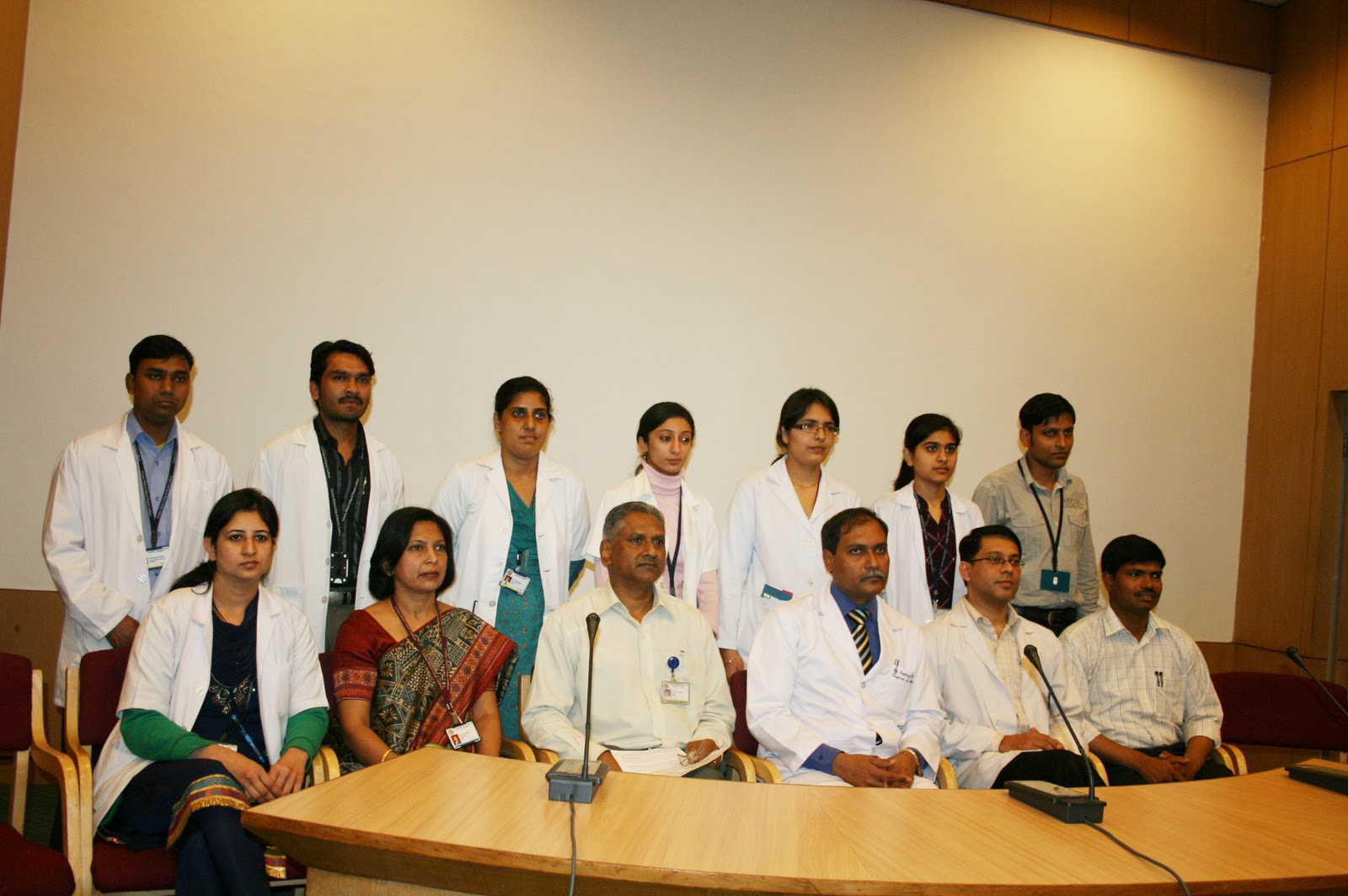 |
| Anti Stroke Team at CMC before media |
The actress cited two of her close family members’ recent stroke attacks as an impetus for her to join the cause. “In our country stroke is the third largest killer and is also, the leading cause of adult disability. It will be my privilege to support the Indian Stroke Association and in its pioneering efforts towards awareness, diagnosis and appropriate management of the condition,” underscores Mukerjee.
Dr Pandian, who is also a Board of Director to World Stroke Organization from Southeast Asia says that in India 40% of the stroke patients die within 1 month after stroke. There are two types of stroke; ischemic when there is blockage of arteries due to a clot, and hemorrhagic (brain hemorrhage) when the artery ruptures. Majority of the patients reach the hospital very late. If they reach within 4 ½ hours patients can receive the clot bursting drug called rtPA. So far over the last 2 years in the CMC Stroke Unit 33 patients have received this drug which is the highest for this period in Northwest India.
Dr Pandian said that stroke patients present with a variety of symptoms. They are sudden weakness of one side of face, arm and leg; sudden trouble speaking; sudden trouble understanding; sudden numbness in one side; sudden imbalance; sudden loss of vision; sudden headache and giddiness. If someone experiences these symptoms they should rush to CMC or call CMC Ambulance number: 98148 29301. Dr Pandian also said that the common causes of stroke are hypertension, diabetes, heart disease, high cholesterol, smoking, overweight and unhealthy lifestyle. He also mentioned that stroke is preventable.
 |
| Dr.Pandian conveying video message of Rani Mukerjee |
Mrs Ruma Singh, Mrs Dilpreet Kaur and Ms Arshi Mangat, Dieticians of CMC stated that stroke can be prevented by consuming healthy food, adapting regular exercise and also by reducing weight. After a stroke, patient needs a coordinated multidisciplinary rehabilitation says Dr Santosh Mathangi who is a Physical Medicine and Rehabilitation Physician in CMC. The other therapists who contribute to the multidisciplinary stroke rehabilitation are Ms Rajni Arora (Neurophysiotherapist), Ms Gagan Toor (Physiotherapist), Ms Dimple (Occupational therapist) and Sanjeev Kumar (Speech Therapist). The stroke rehabilitation team is also involved in many research projects and randomized controlled trials.Dr Kanwal Masih, Medical Superindent lauded the efforts of Stroke Unit in CMC in giving quality care and also raising the public awareness of stroke.--Rector Kathuria and Shalu Arora
A Letter from NAAM
Press Release Sun, Mar 13, 2011 at 10:45 AM For Immediate Release March 13, 2011  National Alliance of Anti-nuclear Movements (NAAM) 42/27 Esankai Mani Veethy Parakkai Road Junction Nagercoil 629 002 Tamil Nadu, India Contact: S. P. Udayakumar, Coordinator Mob: 9865683735; Email: spudayakumar@gmail.com We would like to express our great concern and deep anxiety about the deadly radioactive explosion that has happened at the Fukushima Daiichi nuclear power plant in Japan (some 150 miles north of Tokyo). Both online and television images of the thick white smoke hovering over the exploded nuclear power plant have come to haunt the world public opinion. The Japanese authorities have extended the evacuation zone to 20 kms. The dangerous explosion is said to have blown the roof off the reactor building, brought down walls and caused a very heavy radiation leak. Even after the plant’s chain reaction was stopped, the fuel rods continue to produce heat and must be cooled in order to avoid the meltdown of the fuel. The plant needs a continuous supply of electricity to run the water pumps and the instruments. Since the emergency diesel generators at the Daiichi plant failed, pressure mounted in the reactor, the normal cooling function stopped and resulted in the explosion. The Tokyo Electric Power Co., who operates the exploded power plant has said that the explosion happened “near” the No. 1 reactor. The Japanese nuclear authorities have claimed that “small amounts of radioactive material were likely to leak out.” This is the universal attitude and approach of the nuclear departments of all countries. We will come to know the full and complete details of this worst nuclear disaster in a few more weeks or months. As the world is gearing up to commemorate the 25th anniversary of the deadly nuclear power plant accident at Chernobyl on April 26, 2011, another calamity has stuck the humanity. India’s Department of Atomic Energy (DAE) and the Nuclear Power Corporation of India Ltd. (NPCIL) will try to reassure the people of India that they are far more superior than everybody else in the world and this kind of accidents would never happen in Indian facilities. On January 7, 2005, Dr. L. V. Krishnan, the former director, safety research and health physics at the Indira Gandhi Centre for Atomic Research (IGCAR) at Kalpakkam, claimed in an interview with rediff.com that the Kalpakkam reactors escaping the wrath of the ‘Big Wave’ was a cause of pride for India, as these reactors had been built solely by indigenous effort. Although Dr. Krishnan admitted that tsunami was not taken into consideration when the Kalpakkam reactors were built, the Koodankulam nuclear power plant authorities claimed that they had built the tsunami factor into their project design without giving any proof. The Indian public have to sit up, think and decide here and now how we want to proceed with the dangerous nuclear power program the Indian government and the nuclear establishment have been scheming with very little transparency, accountability and popular participation. Common sense would instruct us not to tread this path of Three Mile Island, Chernobyl and Fukushima but generate energy from safe and sustainable sources. We demand the Government of India to reverse its nuclear adventurisms immediately and chart out a different course to achieve energy security that also incorporates human security. |
--
Peace Is Doable
Sunday, March 13, 2011
Soldier Sings for Love of Music
By Army Sgt. James Sims 139th Mobile Public Affairs Detachment SPRINGFIELD, Ill., March 11, 2011 - The little girl climbed the stairs to her room and shut the door. The world faded away as she grabbed her hairbrush and took the stage before an imaginary audience of thousands of screaming fans.
"I can't remember not hearing Jenny sing," said Debbie Kohany of Oak Lawn, Ill., the soldier's mother. "She was in chorus from first grade all the way through graduation of high school. I would so love hearing her sing at home when she was in her room, whether it was opera, country or rock. When Jen sings, her face lights up and her eyes sparkle. You can see how much she loves to sing." Kohany continued her passion while attending Columbia College in Chicago. "In college I was involved with Columbia College's chorus, and considered a major in vocal performance, but decided instead to major in American sign -language interpretation," she said. When Kohany was in basic training, one of her drill sergeants emphasized the importance of being aware of U.S. military history, in addition to learning basic warrior skills. She was randomly chosen and asked if she knew the national anthem, she said, and having grown up in a patriotic family, she did. Francis Scott Key wrote the lyrics to "The Star-Spangled Banner" during the British attack on U.S. forces at Fort McHenry during the Battle of Baltimore during the War of 1812. "They called me to the front of the 'war room' and called everyone to attention while I sang," Kohany said. "The drill sergeants stood there in shock that not only did I know the words, but I actually knew how to sing, as well." Since then, fellow soldiers have asked her to sing at various events. Kohany was part of the Illinois Army National Guard's largest call-up since World War II and deployed to Afghanistan with the 33rd Infantry Brigade Combat Team in 2008. During her deployment, a contest called Phoenix Idol showcased the talent of soldiers serving in Task Force Phoenix. "A good friend of mine, Staff Sergeant Adam Gordon, was the emcee of Phoenix Idol and asked if I would come out on New Year's Eve and participate," Kohany said. "I obliged, with no intention of entering the competition, because I had a pretty hectic schedule and didn't really have the time to learn and practice music for each week's category." Kohany did not win the contest, but was noticed by several soldiers on Camp Phoenix. She was introduced to Tom Negovan, a WGN reporter from Chicago, while he was visiting Camp Phoenix to do a three-part series on Afghanistan, she said. "[Negovan] interviewed me, and asked if I would have any interest in singing at a Cubs game when I returned back to the states," Kohany said. "Sure enough, we stayed in touch, and as soon as I had a number to call, I was receiving a call from a Cubs publicist, asking if I'd be available to sing for the opening." Though she grew up as a Yankees fan, Kohany said, she also likes the Chicago Cubs. Singing in front of 40,000 people, with her friends and family present, was amazing, she added. "Listening to someone who has given their blood, sweat and tears for this country and then so passionately sings our national anthem gives me chills every time," said Army Staff Sgt. John Robinson of Champaign, who served with Kohany as a chaplain's assistant in Afghanistan. "I believe every time someone like Jen sings it, she does it as an honor to our nation and for those who have paid the ultimate sacrifice." Her most meaningful performance came in June 2005, though not on the happiest note, Kohany said. "My mom had been engaged to one of the most incredible people I've ever met, Eamonn," she said. "They had put off getting married while I was in college, but because of the closeness of our relationship, I referred to him as my stepdad. My mom manages a small Irish bar on the south side of Chicago. Every so often, I would stop in on a Friday night when Eamonn could persuade me to sing on karaoke night. He was really the only person who could charm me into singing there, and always asked me to sing 'Angel' by Sarah McLaughlin; both mine and his favorite song." That January, a friend of Eamonn's died, and he asked Kohany to sing a couple of songs at the wake. After the church ceremony, someone approached Eamonn and complimented the voice of his "daughter." "He acknowledged his pride, and it was one of the prouder moments in my own life," Kohany said. "Little did I know that only six months later, Eamonn would pass away, while at work, at 1 o'clock in the morning. "It was one of the hardest things that I've ever had to do," she continued, "but I knew it would mean the world to my mom and family. So at his memorial ceremony, I sang 'Angel.' That certainly wasn't my favorite performance, but it was the most monumental. It was hard, and I knew that if I could get through the song that I could do nearly anything, and I know that he would've been proud." Kohany said her mother has encouraged her to pursue a career in singing, but that she sings for the love of singing, not the love of fame. "I do it because I enjoy it, not because I'm trying to get discovered or anything like that," she said. "Since high school, she has urged me to pursue a singing career, but I've found my niche with the military, and I'm pretty happy with that." | ||
| Related Sites: Illinois National Guard | ||

Amnesty urged Saudi Arabia to reverse the ban

New York : Amnesty International today urged Saudi Arabian authorities to reverse the ban on peaceful protest in the Kingdom, amid fears of a violent crackdown on mass demonstrations planned for Friday's “Day of Rage”.
Prince Saud Al-Faisal, the country’s foreign minister, said on Wednesday that “reform cannot be achieved through protests,” while the protest ban, confirmed on Saturday, was backed by religious and security bodies.
"Instead of banning peaceful protests the Saudi Arabian authorities should address the need for major human rights reform in the country," said Philip Luther, deputy director of Amnesty International's Middle East and North Africa program.
“They must heed the growing calls for change within Saudi Arabia.”
Saudi Arabia's "Day of Rage" was organized online using Facebook. One page has over 33,000 followers.
Media reports over the weekend suggested that some 10,000 Saudi troops would be deployed to crack down on any protests.
The ban was also backed by the president of the Mutawa'een (religious police), the Council of Senior Ulema (religious clerics) and the Shura Council (a consultative body appointed by the King).
“Reports that the Saudi authorities plan to deploy troops to police upcoming demonstrations are very worrying,” said Luther. “Rather than seeking to intimidate would-be demonstrators from coming out on the streets, the authorities should rein in the security forces and allow peaceful protests to take place.”
Amnesty International has also called on the authorities to release or charge a man detained on Friday, March 4 during a protest in the capital Riyadh.
Muhammad al-Wad'ani has been detained incommunicado since his arrest and is believed to be at risk of torture.
A video posted on YouTube two days before the demonstration showed Muhammad al-Wad'ani calling for the fall of the monarchy and for people to join the protest.
Around 24 people were detained on 3 and 4 March following protests in the city of al-Qatif, denouncing the prolonged detention without trial of Shi'a prisoners. They were released on 8 March without charge reportedly only after they signed a pledge not to protest again.
Background
The Ministry of Interior was reported to have said in 2008 that protests in Saudi Arabia were banned, after a demonstration against Israel's military action in Gaza.
Although Amnesty International is not aware of any legal text banning demonstrations, in practice the Saudi Arabian authorities have not allowed them to take place.
Torture and other ill-treatment is frequently used to extract confessions from detainees, to punish them for refusing to “repent” or to force them not to criticize the government.
Incommunicado detention in Saudi Arabia often lasts until a confession is obtained, which can take months and occasionally years.
Amnesty International is a Nobel Peace Prize-winning grassroots activist organization with more than 3 million supporters, activists and volunteers in more than 150 countries campaigning for human rights worldwide. The organization investigates and exposes abuses, educates and mobilizes the public, and works to protect people wherever justice, freedom, truth and dignity are denied. (Issued on March 10, 2011)
# # #
Subscribe to:
Posts (Atom)