Saturday, February 07, 2026

Union Home Minister pays tribute to the martyrs at the ‘Ajey Prahari’ memorial

Ministry of Home Affairs//Posted On: 06th February 2026 at 6:05 PM by PIB Delhi//PIB

Union Home Minister and Minister of Cooperation, Shri Amit Shah, visits ‘Gurnam’ and ‘Bobiya’ BOPs, located on the India-Pakistan border, during the second day of his Jammu visit

Union Home Minister pays tribute to the martyrs at the ‘Ajey Prahari’ memorial

Shri Amit Shah inaugurates and lays foundation stone for welfare projects worth approximately ₹250 crore for the border sentinels

The history filled with bravery and valour of BSF has awakened a sense of duty and patriotism among the people of country

Against infiltration and encroachment on the country’s borders, BSF has stood like an impregnable wall and kept the nation secure

The courage and gallantry displayed by BSF in ‘Operation Sindoor’ has become a golden chapter in its six-decade history

Wherever the BSF has been deployed, it has proudly unfurled the flag of valour

The 61st anniversary year of BSF’s establishment will be dedicated to the modernization of the force and to the welfare of its jawans and their families

The Home Minister appreciated the significant contribution of BSF women personnel in border guarding and also had lunch with jawans

New Delhi: 06th February 2026: (PIB Delhi//The Spis News Desk)::

Union Home Minister and Minister of Cooperation, Shri Amit Shah, today visited the Border Out Posts (BOPs) ‘Gurnam’ and ‘Bobiya’ located on the India-Pakistan border during the second day of his visit to Jammu. The Home Minister paid floral tributes to the martyrs at the “Ajey Prahari” memorial and also planted a sapling at the Border Outpost Bobiya. Shri Shah inaugurated projects worth ₹ 7 Crore for the welfare of troops, including newly built Solar Water Heaters, Solar Power Plants, and an Officers’ mess. He also laid foundation stone for the BSF infrastructure projects worth ₹ 242 Crore. The event was attended by Jammu and Kashmir Lieutenant Governor Shri Manoj Sinha, Union Home Secretary, Director of the Intelligence Bureau (IB), Director General of the Border Security Force, and other senior officials.
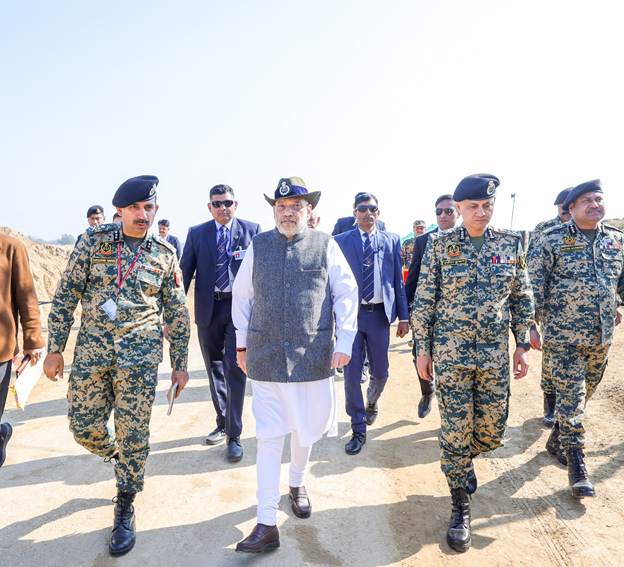
 Addressing BSF personnel, Shri Amit Shah said that whenever he visits BSF posts located in remote and challenging areas of Kutch, Rajasthan, or Jammu and Kashmir, he always returns with values of duty consciousness and unwavering commitment from the soldiers posted there. He said that during such visits, he witnesses how BSF personnel perform their duties with deep dedication under difficult and challenging conditions. The Home Minister described BSF personnel as the finest example of discipline and dedication, standing firm day and night to protect the nation’s borders. He added that the BSF’s glorious 60-year history has instilled the same sense of discipline among the people of the country.
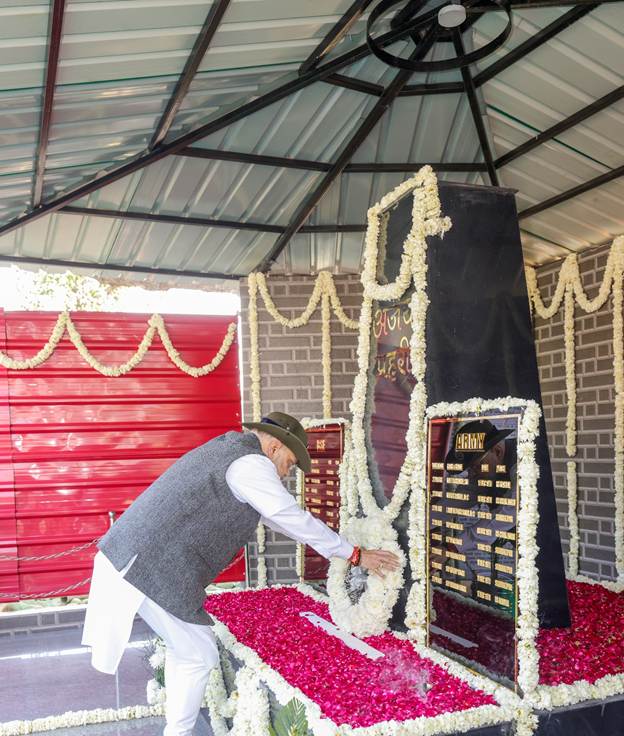
 

 Union Home Minister Shri Amit Shah said that whenever the nation’s borders have faced threats of intrusion or infiltration, the BSF has stood like an impregnable wall, resolute in its commitment to safeguarding the country. He stated that the bravery and valor displayed by the BSF during 'Operation Sindoor' have added a golden chapter to its six-decade-long history. Even in the most challenging times, BSF personnel upheld the spirit of “We are the sentinels of the border.” He said that the BSF’s Jammu and Kashmir Frontier completely destroyed 118 Pakistani posts and three terrorist launch pads. In this operation, Sub-Inspector Mohammad Imtiaz Ahmad and Constable Deepak Chingakham, who laid down their lives in the line of duty, were awarded the Vir Chakra. which is a matter of immense pride for us. Shri Shah also said that during this period BSF also received 16 gallantry medals and several commendation certificates.
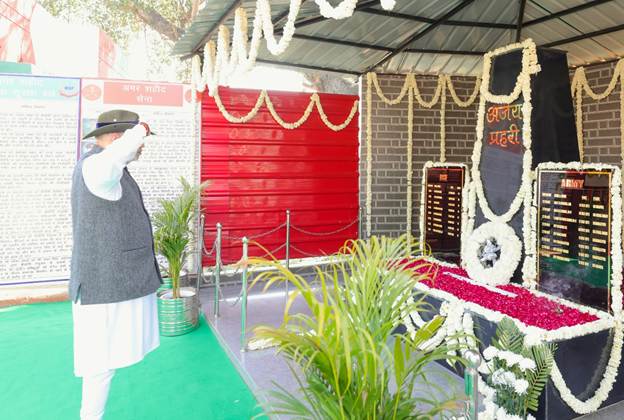
Shri Amit Shah said that whether deployed along the borders, in the difficult terrain of Manipur, or in Maoist-affected areas of Odisha and Chhattisgarh, the BSF has demonstrated impeccable courage everywhere. He praised the force for its outstanding humanitarian service during natural disasters, particularly in Punjab. Shri Shah said that the Chief Minister of Punjab informed him that without the BSF, the challenges during floods would have multiplied manifold. The BSF rendered invaluable service to the people of Punjab and extended extensive assistance during the crisis.
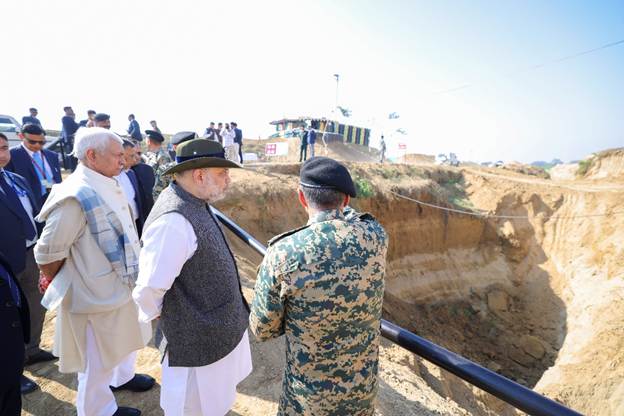
Union Home Minister Shri Amit Shah said that it is a shared responsibility to ensure that the nation’s borders remain fully secure and vigilant. He noted that border-related challenges have changed significantly over the past 60 years. While the courage, alertness, and dedication of personnel remain crucial, many emerging challenges are now technology-driven. Therefore, advanced technological solutions must be adopted to effectively address them. He recalled that during the BSF Raising Day celebrations, he had announced that the 61st year of the BSF would be dedicated to modernization, as well as to the welfare of BSF personnel and their families. He added that a dedicated team in the Ministry of Home Affairs (MHA) is continuously working on both fronts.
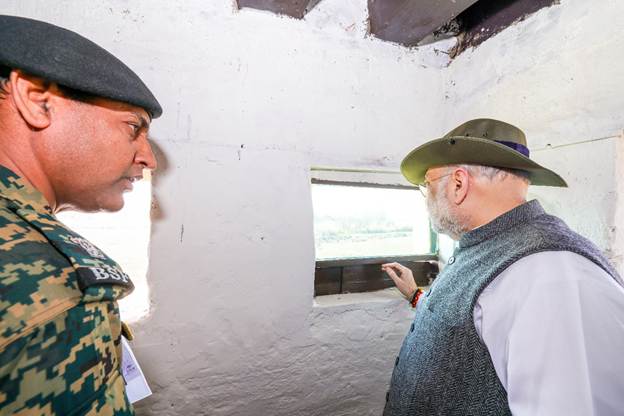
Shri Amit Shah said that under the leadership of Prime Minister Shri Narendra Modi, the Government of India is fully committed to the welfare of security personnel. He announced that a special welfare scheme for BSF personnel will be introduced soon. Moreover, the Government will invest substantial funds to technologically modernize the entire border security system. This modernization will provide improved border infrastructure and advanced equipment for BSF personnel, enabling them to perform their duties more effectively. Shri Shah said these facilities will significantly reduce hardships faced by the soldiers and enhance their operational efficiency. He added that it is because of the unwavering sense of duty, dedication, and commitment of BSF personnel stationed along the borders that the entire nation sleeps peacefully and feels secure.
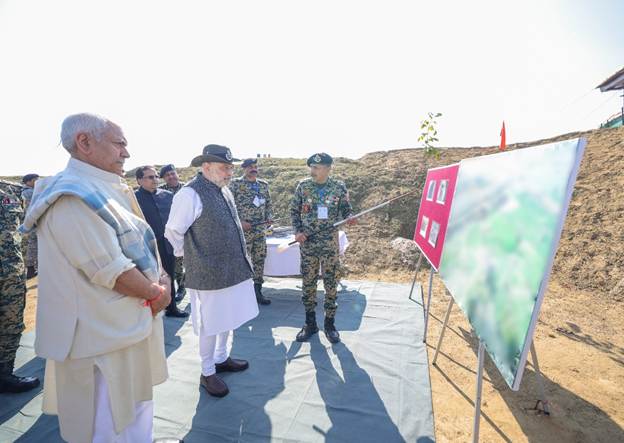
The Home Minister also appreciated the significant contribution of women personnel in the BSF towards border security. He later had lunch with the soldiers.

*****

RK/RR/PR/PS//(Release ID: 2224574) 

Sunday, December 14, 2025

The President presented National Energy Conservation Awards 2025

President's Secretariat//Azadi Ka Amrit Mahotsav//Regarding National Energy Conservation Awards

Posted On: 14 DEC 2025 at 2:32 PM by PIB Delhi

Behavioral Change is crucial for Bringing Energy efficiency: President Droupadi Murmu

New Delhi: 14th December 2025: (By PIB Delhi//The Spis News Desk):

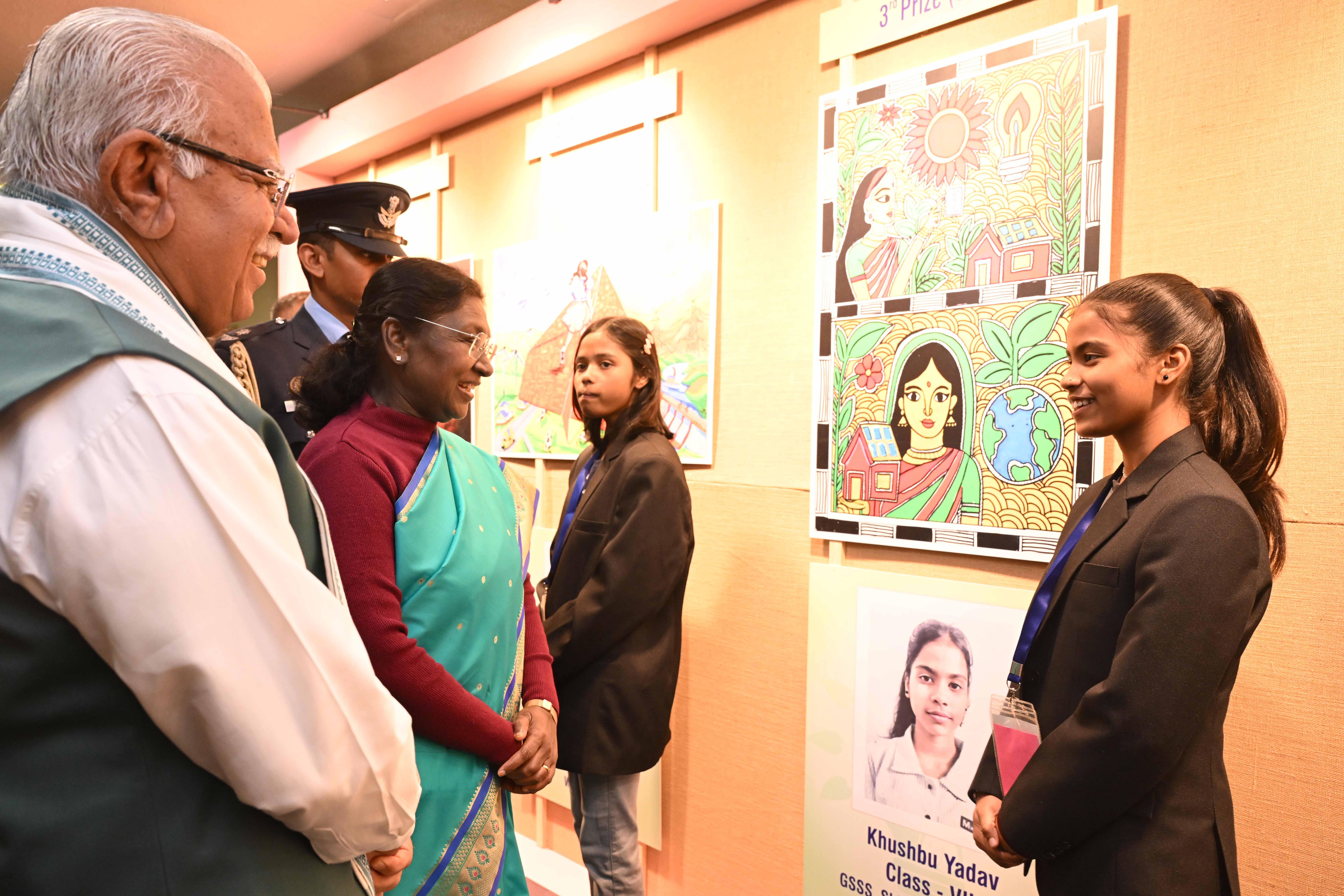
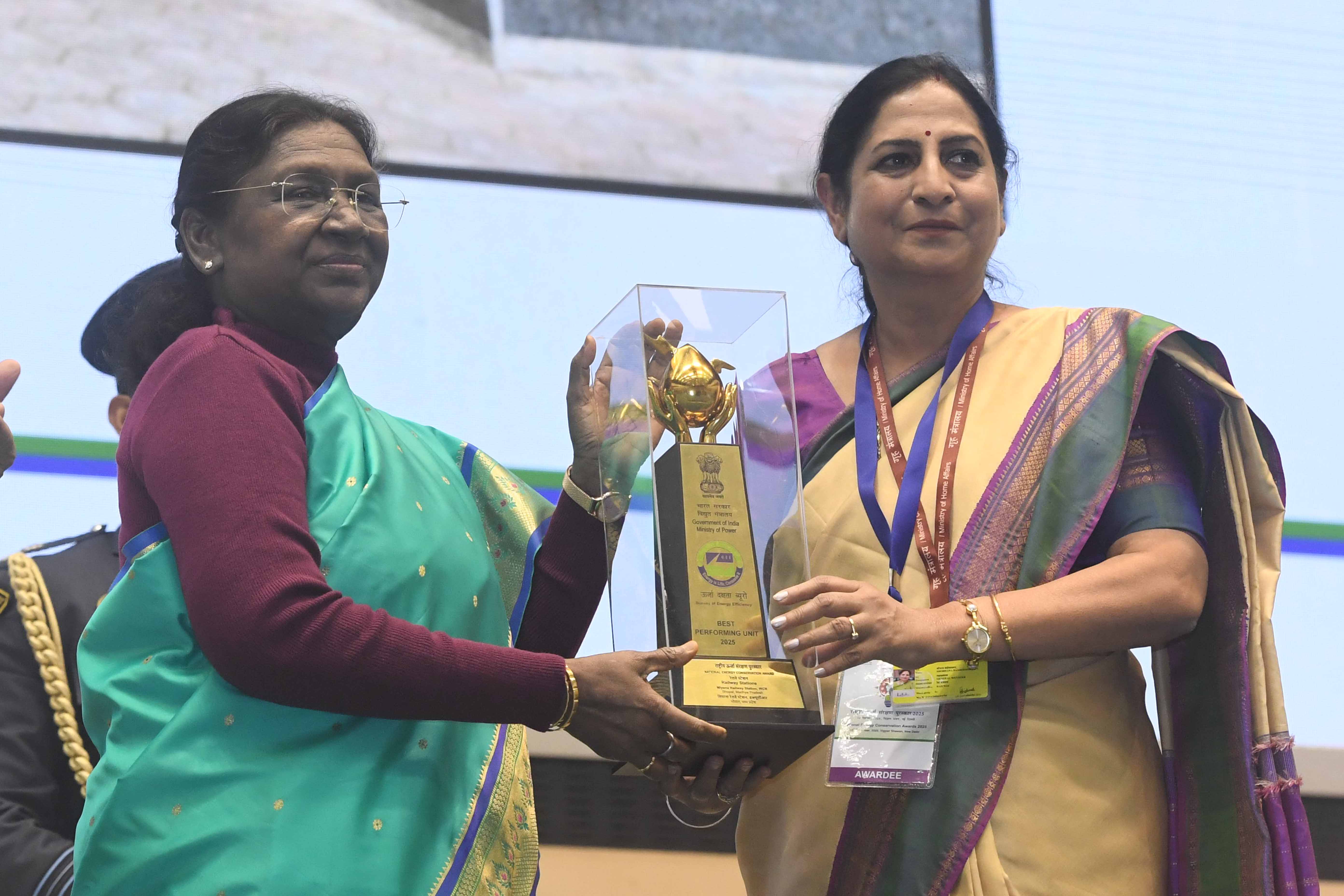
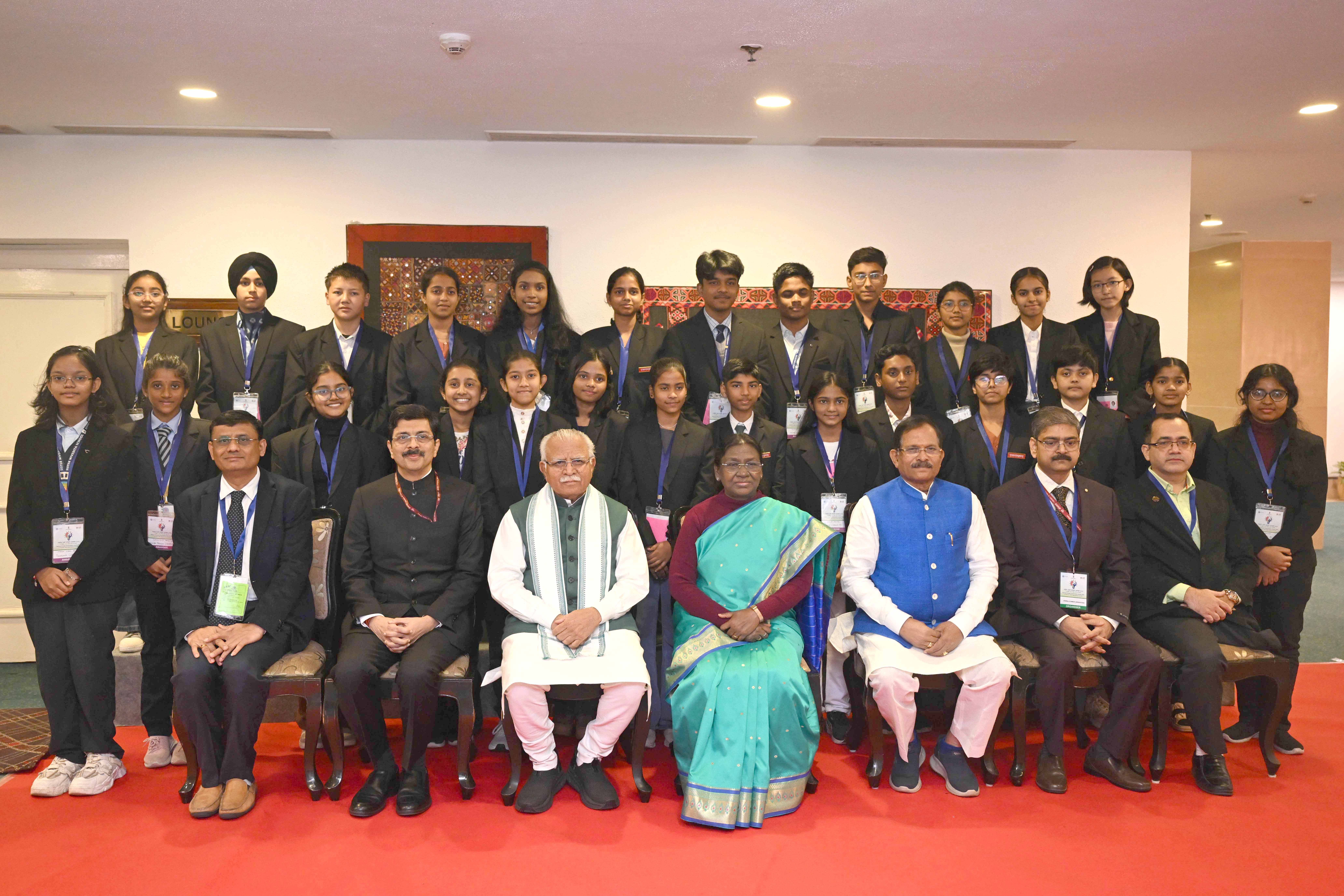
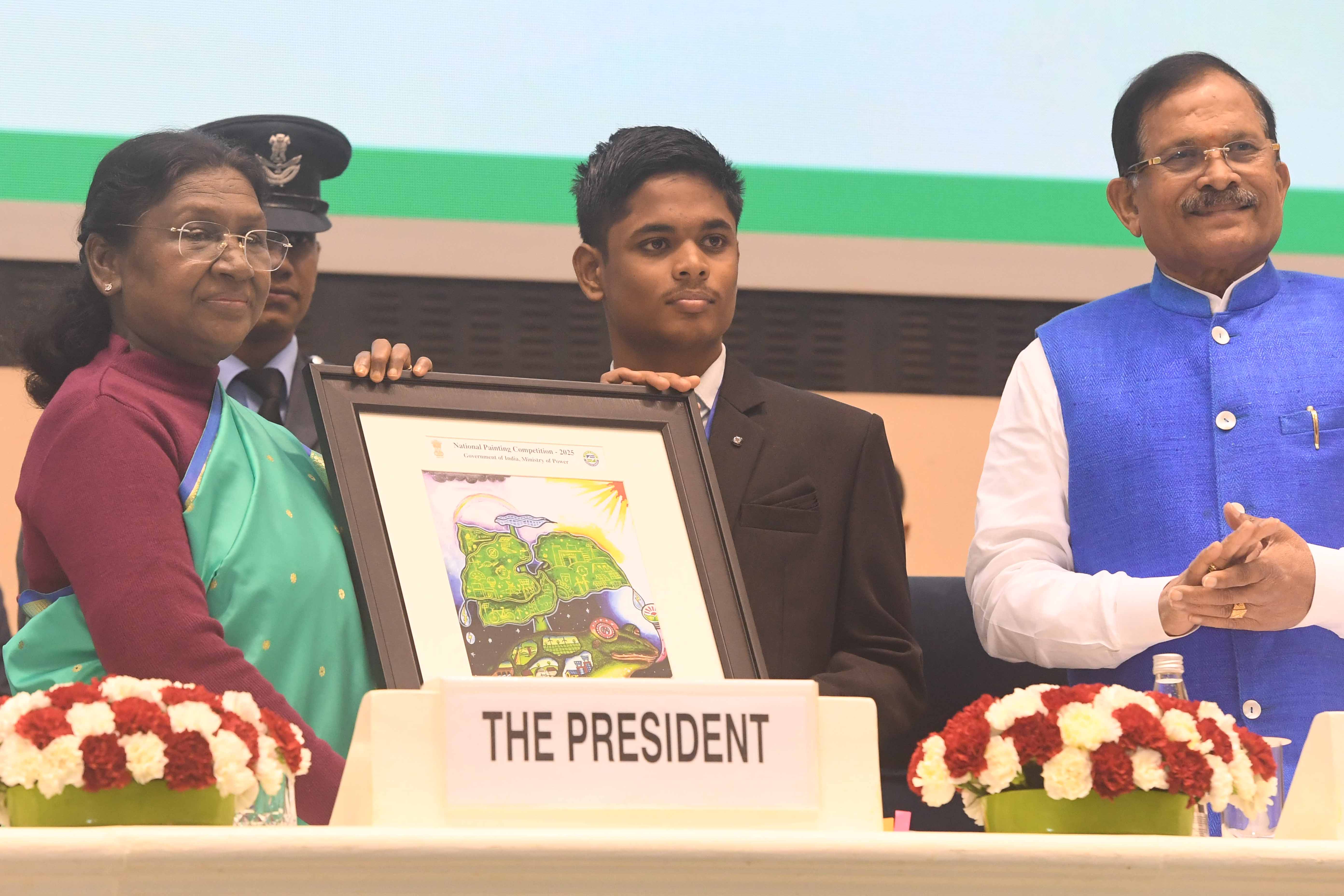
     The President of India, Smt Droupadi Murmu, presented the National Energy Conservation Awards 2025 and National Painting Competition on Energy Conservation prizes in New Delhi today (December 14, 2025) on the occasion of National Energy Conservation Day. 

Addressing the gathering, the President said that energy conservation is the most environmentally friendly and reliable source of energy. Energy conservation is not just an option, but the most crucial need of today. She underlined that saving energy doesn't simply mean using less, but rather utilising energy wisely, responsibly, and efficiently. She said that when we avoid unnecessary use of electrical appliances, adopt energy-efficient devices, utilise natural light and ventilation in our homes and workplaces, or embrace solar and renewable energy options, we not only save energy but also reduce carbon emissions. Energy conservation is also important for maintaining clean air and safe water sources, and a balanced ecosystem. She stated that every unit of energy we save will be a symbol of our responsibility towards nature and our sensitivity towards future generations.


The President emphasised that if the youth and children are aware about energy conservation and make efforts in this direction, then the goals in this area can be achieved and the sustainable development of the country can be ensured.


The President said that access to affordable and clean energy empowers communities. It stimulates the local economy and creates new growth opportunities. Therefore, green energy is not limited to electricity generation; it is a powerful means of empowerment and inclusive development.


The President was happy to note that the initiatives, such as Pradhan Mantri Surya Ghar Muft Bijli Yojana and the National Green Hydrogen Mission, are reducing dependence on fossil fuels. The government is also promoting renewable energy adoption and energy efficiency through the Renewable Consumption Obligation and Production Linked Incentive schemes. She noted that India's energy efficiency efforts in 2023-24 resulted in energy savings of 53.60 million tonnes of oil equivalent. She said that these efforts are leading to significant economic savings annually and have also resulted in a substantial reduction in CO₂ emissions.

The President said that the participation of every sector and citizen is essential for the success of India's energy transition. Behavioural change is crucial for bringing energy efficiency to all sectors. The consciousness of adopting a balanced lifestyle in harmony with nature is fundamental to India's cultural tradition – this very sentiment forms the basis of our message to the world, "Lifestyle for Environment – LiFE." She appreciated all stakeholders working in the field of energy conservation and said that their contribution will ensure a healthy and bright future for the coming generations. She expressed confidence that with the spirit of collective responsibility, partnership, and public participation, India will continue to play a leading role in energy conservation and achieve its goals towards a green future. 

Click here for President's Speech.

*****MJPS/SR//(Release ID: 2203686)

Friday, November 28, 2025

Bharat Scouts and Guides

President's Secretariat//Azadi Ka Amrit Mahotsav//Posted on: 28th November 2025 at 6:07 PM by PIB Delhi

President of India Graces Closing Ceremony of the Diamond Jubilee Celebrations

New Delhi: 28th November 2025: (PIB Delhi//The SPIS News Desk)::

The President of India, Smt Droupadi Murmu, graced the closing ceremony of the Diamond Jubilee Celebrations of Bharat Scouts and Guides and addressed its 19th National Jamboree at Lucknow, Uttar Pradesh, today (November 28, 2025).

Speaking on the occasion, the President said that it is a matter of pride that for the past 75 years, Bharat Scouts and Guides has been guiding the youth and inspiring them to become active participants in nation-building. She underlined that the spirit of service is the greatest strength of Scouts and Guides. Whether it's a flood, an earthquake, or an epidemic, Scouts and Guides are always at the forefront of assistance. Another hallmark of this organisation is its promotion of national unity. She appreciated Bharat Scouts and Guides for making youth empowered, sensitive, and committed to work for the country's future.

The President noted that there are over 6.3 million Scouts and Guides in India, which makes Bharat Scouts and Guides one of the largest Scouts and Guides organisations in the world. She was happy to note that more than 2.4 million girls are associated with this organisation. She appreciated all those girls for choosing the path of discipline, dedication, and the welfare of society and humanity.

The President said that the motto of Scouts and Guides is "Be Prepared." This means that one must be prepared to face any challenges that may arise in the future. She advised Scouts and Guides to develop the ability to face any challenge without hesitation, with determination and confidence. She said that whether it's technical skills, communication skills, team coordination, problem-solving skills, or leadership abilities, all will be helpful in their life.

The President said that the youth of the nation are both the architects of this country's future and the guardians of its great cultural and civilisational traditions. A strong and sensitive individual can empower and sensitise many others, just like a lamp lights several other lamps. She expressed confidence that the youth will devote themselves to the development of our nation.

*********

MJPS/SR//(रिलीज़ आईडी: 2195987) 

‘Meditation For World Unity and Trust at’ at Lucknow

President's Secretariat//Azadi Ka Amrit Mahotsav//Posted on 28th November 2025 at 2:14 PM by PIB Delhi

President of India Graces The Launch Ceremony of Brahma Kumaris' 

Annual Theme for 2025-26 is Meditation, Unity and Trust 

New Delhi: 28th November 2025: (PIB Delhi//The SPIS News)::

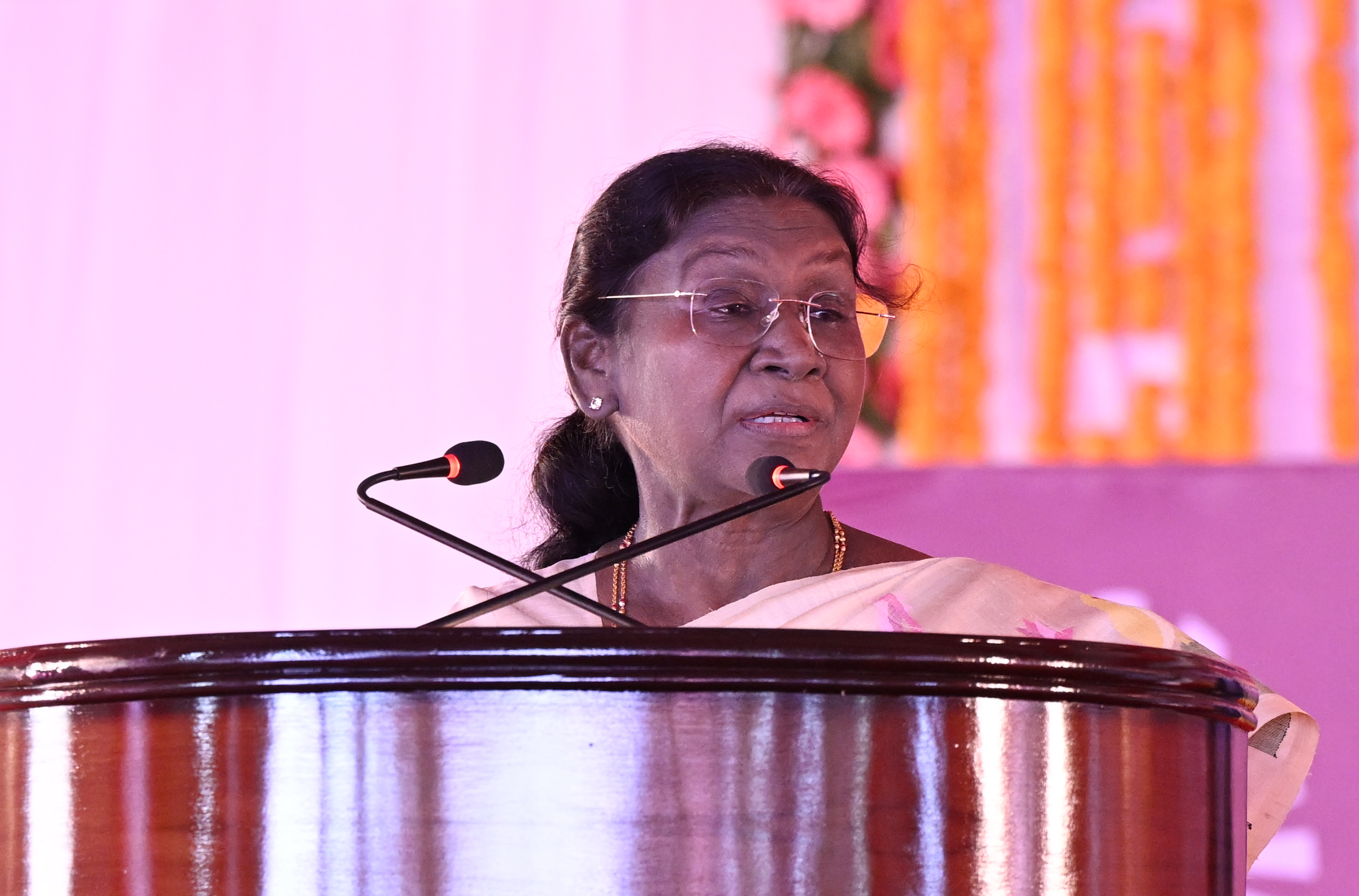
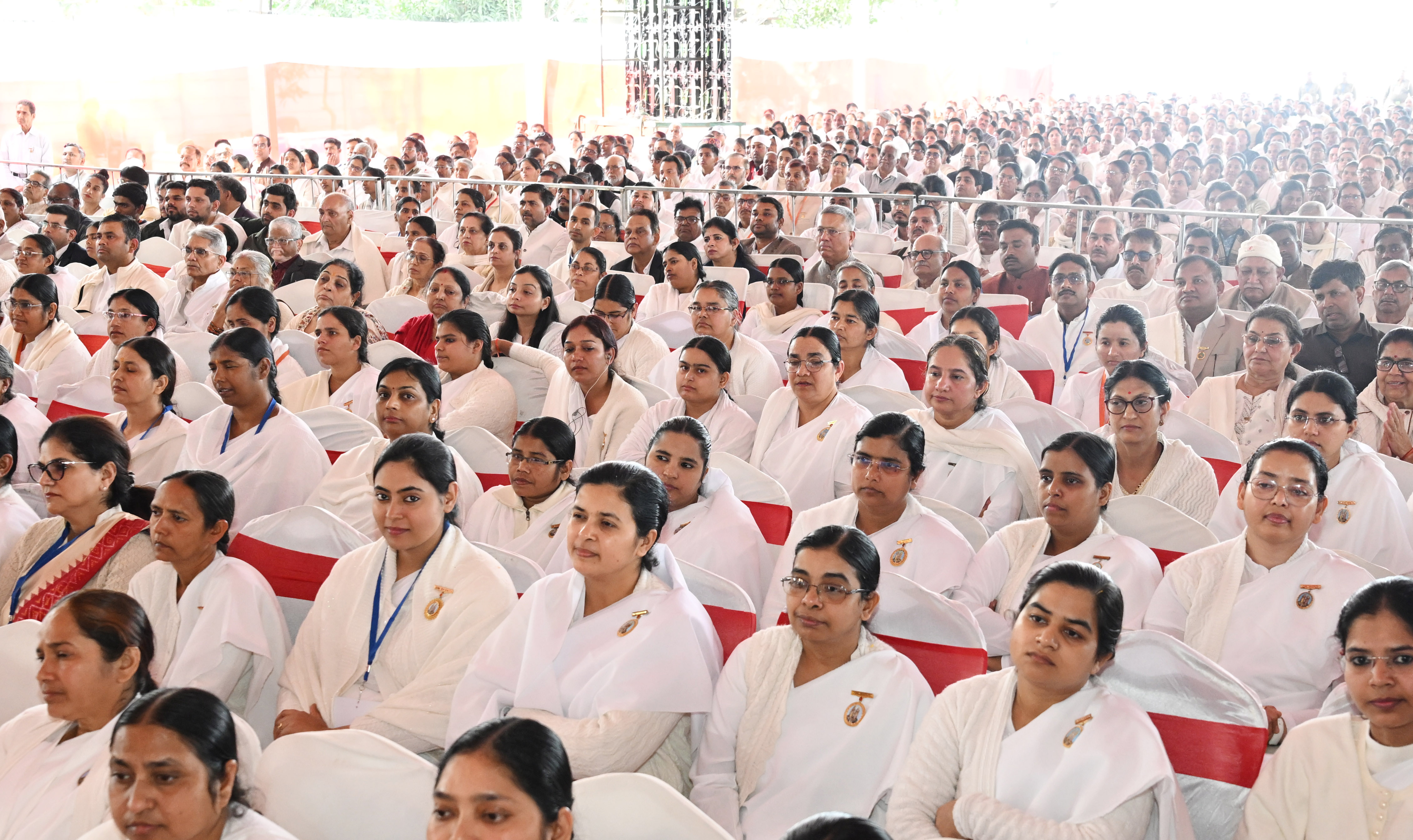
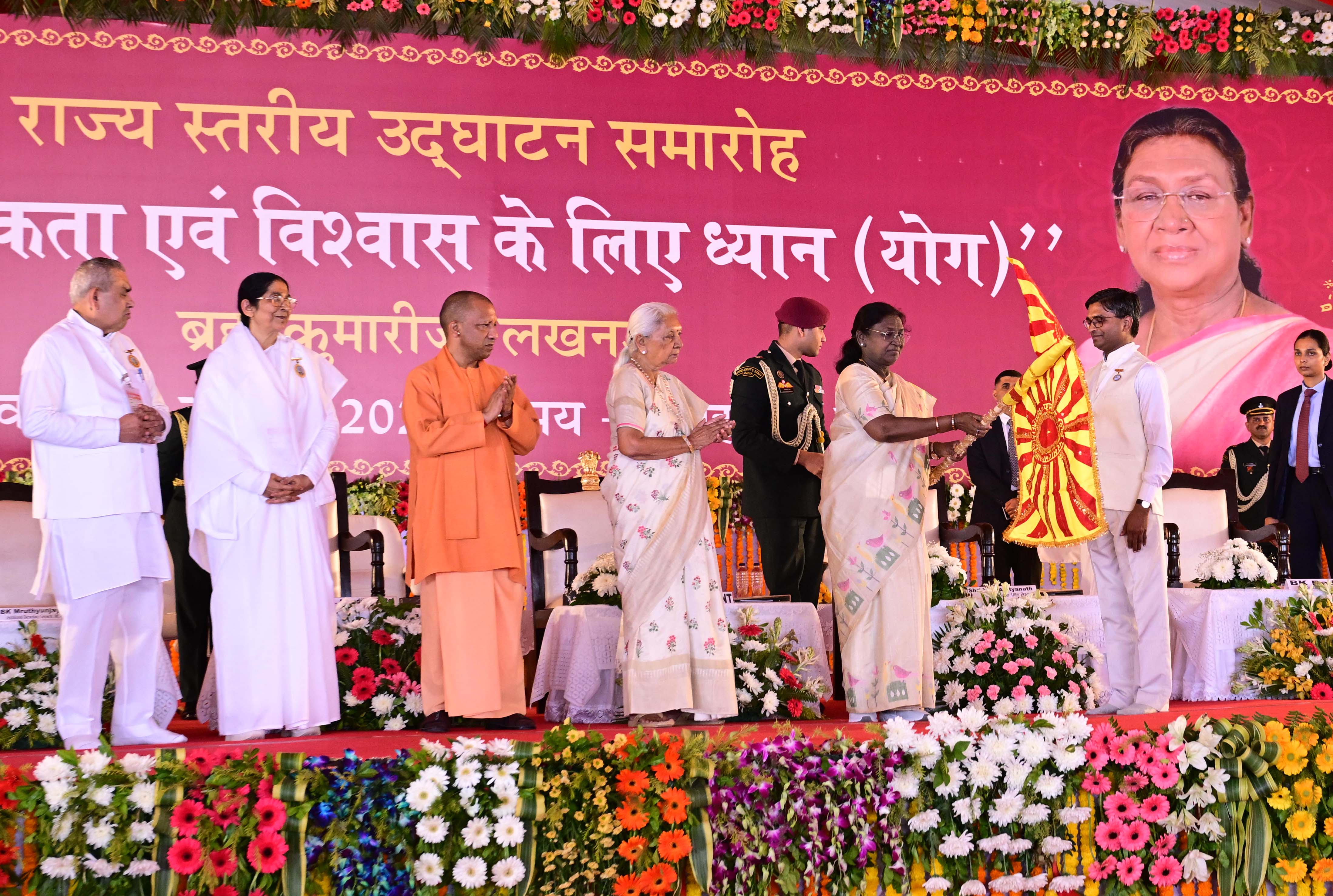
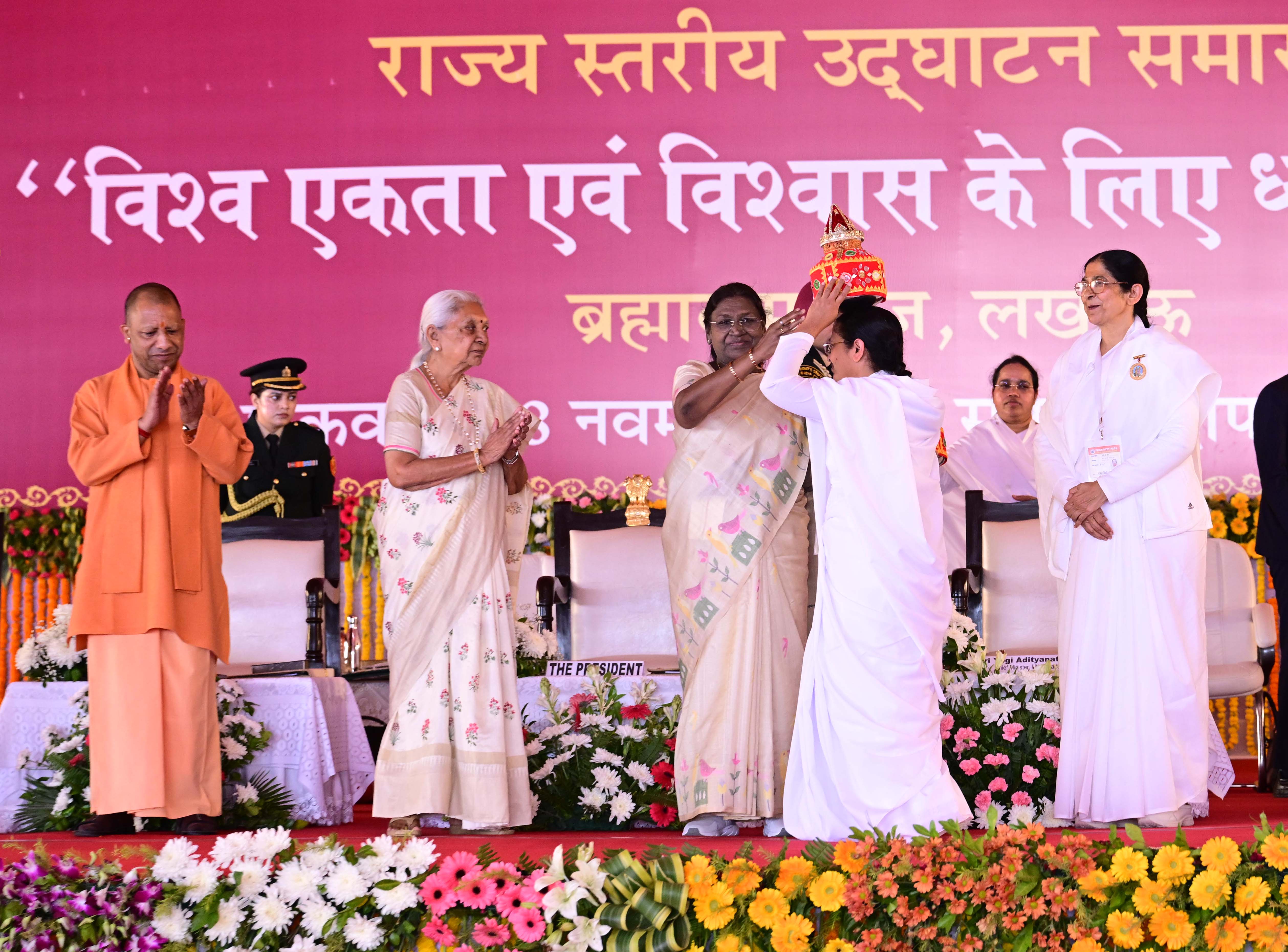
The President of India, Smt Droupadi Murmu, graced the launch ceremony of the Brahma Kumaris' annual theme for 2025-26, ‘Meditation for World Unity and Trust’, at Lucknow, Uttar Pradesh (November 28, 2025).

Speaking on the occasion, the President said that in modern times, on the strength of science and technology, humanity has made unprecedented progress. Today is the era of information technology, artificial intelligence, digital transformation, and space exploration. These revolutionary changes have made human life more convenient, accessible, and resource-rich. Today's humans are more educated and technologically capable than ever before and have many opportunities for advancement. However, alongside technological advancement in society, there is also stress, mental insecurity, distrust, and loneliness. In this scenario, it is essential that we not only move forward but also embark on a journey of introspection. When we pause for a moment and communicate with ourselves, we realise that peace and joy lies not in any external object, but within ourselves. When spiritual consciousness awakens, love, brotherhood, compassion, and unity automatically become a part of life. A calm and stable mind sows the seeds of peace in society, and from there, the foundation of world peace and unity is laid. A strong spirit is the cornerstone for realizing the concept of global unity.

The President praised the inspiring efforts of Brahma Kumaris in the areas of world peace, human values, women's empowerment, spiritual awakening, education, and meditation. She expressed confidence that all sisters and brothers of this organisation will continue to play an important role in building a better, peaceful, and trusting world.


Please click here to see the President's speech-

 ****MJPS/SR//(रिलीज़ आईडी: 2195792)******

Sunday, August 31, 2025

Prime Minister's bilateral meeting with Chinese President Xi Jinping

 Prime Minister's Office//Azadi Ka Amrit Mahotsav//Posted On: 31 AUG 2025 at 1:58 PM by PIB Delhi

Both leaders welcomed the positive momentum and steady progress 

PM meeting with the President of China, Mr. Xi Jinping in Tianjin, China

New Delhi: 31 August 2025: (PIB Delhi//The Spis News)::

Prime Minister Shri Narendra Modi met with Mr. Xi Jinping, President of the People’s Republic of China, on the sidelines of the Summit of the leaders of the Shanghai Cooperation Organization (SCO) in Tianjin on 31 August 2025.

Both leaders welcomed the positive momentum and steady progress in bilateral relations since their last meeting in Kazan in October 2024. They reaffirmed that the two countries were development partners and not rivals, and that their differences should not turn into disputes. A stable relationship and cooperation between India and China and their 2.8 billion peoples on the basis of mutual respect, mutual interest and mutual sensitivity are necessary for the growth and development of the two countries, as well as for a multipolar world and a multi-polar Asia befitting the trends of the 21st century.

Prime Minister underlined the importance of peace and tranquility on the border areas for continued development of bilateral relations. The two leaders noted with satisfaction the successful disengagement last year and the maintenance of peace and tranquility along the border areas since then. They expressed commitment to a fair, reasonable, and mutually acceptable resolution of the boundary question proceeding from the political perspective of their overall bilateral relations and the long-term interests of the two peoples. They recognized the important decisions taken by the two Special Representatives in their Talks earlier this month, and agreed to further support their efforts.

The two leaders noted the need to strengthen people-to-people ties through direct flights and visa facilitation, building on the resumption of Kailash Manasarovar Yatra and tourist visa. On economic and trade relations, they recognized the role of their two economies to stabilize world trade. They underlined the need to proceed from a political and strategic direction to expand bilateral trade and investment ties and reduce trade deficit.

Prime Minister noted that India and China both pursue strategic autonomy, and their relations should not be seen through a third country lens. The two leaders deemed it necessary to expand common ground on bilateral, regional, and global issues and challenges, like terrorism and fair trade in multilateral platforms.

Prime Minister expressed support for China's Presidency of the SCO and the Summit in Tianjin. He also invited President Xi to the BRICS Summit that India will be hosting in 2026. President Xi thanked Prime Minister for the invitation and offered China's support to India's BRICS Presidency.

Prime Minister also had a meeting with Mr. Cai Qi, Member of the Standing Committee of the Politburo of the Communist Party of China. Prime Minister shared with Mr. Cai his vision for bilateral relations and sought his support to realize the vision of the two leaders. Mr. Cai reiterated the Chinese side's desire to expand bilateral exchanges and further improve relations in line with the consensus reached between the two leaders.

***//MJPS/SR//(Release ID: 2162428)

Friday, August 23, 2024

Tricolor: The spirit of India-Essence from the Past: Hope for Future

 Friday 23rd August 2024 at 9:12 AM

Ram Puniyani analyses the call by NDA govt. 

Bhopal:23rd August 2024: (Ram Puniyani//The SPIS News Desk)::

On the occasion of this Independence Day (2024) NDA Government gave a call for the third edition of Har Ghar Tiranga (Tricolor in every house). This event first began in 2022 by the BJP government. It was a great surprise; as BJP’s ideological parent RSS has been opposed to the tricolor as the national flag all through, till  26th January 2001, when “According to the case, three activists Baba Mendhe, Ramesh Kalambe and Dilip Chatwani — along with others allegedly entered the RSS premises in Reshimbagh on 26 January in 2001 and hoisted the national flag there amid patriotic slogans.”

A police case was registered against them and they were jailed (Case no 176), Nagpur 2001. They were acquitted and the 51 years of RSS not hoisting tricolor came to an end. Tricolor (that time with Charkha in the middle) had emerged as an inspiring flag during the freedom movement. When Jawaharlal Nehru became the President of INC 1929 Lahore session, he called upon the Nation to celebrate 26th January as Independence Day by hoisting the tricolor. IN contrast K. B. Hedgewar issued a circular on 21 January 1930 to hoist Bhagva Jhenda (Saffron Flag). Circular instructed the members of RSS to assemble at 6 PM at the places where shakhas met for “salutation to the National Flag, i.e., the Bhagwa Dhawaj.”

Their argument was that the saffron flag represents the Hindu nation from times past so no need for a new flag. Anyway all those participating in the freedom movement adopted the tricolor flag except those who kept aloof from anti colonial freedom struggle, Muslim League (green flag) and RSS (Saffron flag). Savarkar of Hindu Mahasabha also stood for the saffron flag.

M.S Golwalkar, the Second RSS Chief put forward the ideology of RSS vis a vis flag, he stated “It was the saffron flag which in totality represented Bhartiya [Indian] culture. It was the embodiment of God. We firmly believe that in the end the whole nation will bow before this saffron flag.”

At every stage the RSS’s unofficial mouthpiece used to come out with editorials opposing tricolor and upholding the saffron flag. The flag committee was chaired by Dr. Rajendra Prasad, and had C. Rajagopalachari, Maulana Azad, K. M. Munshi and Dr. Ambedkar as its members. They considered all the other proposals and came to finalize Congress’s flag, the tricolor with the difference that the Charkha in the flag was replaced by Ashok Chakra with 24 spokes in the flag. While moving the resolution for the flag in the Constituent Assembly, Nehru with full appreciation of India’s history and culture saw the flag as a continuation of the glorious tradition of the past and hope for the future. His remarkably touching speech referred to the great sacrifices of Indian people to throw away the shackles of slavery. He also related it to Asoka and his international fame and message of peace and saw in it a bridge to the global community.

As per Nehru, “We thought of a Flag which in its combination and in its separate parts would somehow represent the spirit of the nation, the tradition of the nation, that mixed spirit and tradition which has grown up through thousands of years in India… we have associated with this Flag of ours not only this emblem but in a sense the name of Asoka, one of the most magnificent names not only in India's history but in world history “

Despite this the RSS, Sangh Parivar, continued with glorifying of Hindu nationalist ideology. Golwalkar further wrote in "Bunch of Thoughts“. Even after Independence, it was the RSS which refused to accept the Tricolor as the National Flag. Golwalkar, while denouncing the choice of the Tricolor as the National Flag, in an essay entitled ‘Drifting and Drifting’ in the book, ‘Bunch of Thoughts’ (collection of writings/speeches of Golwalkar), wrote: “Our leaders have set up a new flag for our country. Why did they do so? It is just a case of drifting and imitating….Ours is an ancient and great nation with a glorious past. Then, had we no flag of our own? Had we no national emblem in all these thousands of years? Undoubtedly we had. Then why this utter void, this utter vacuum in our minds?”

Savarkar too refused to accept the Tricolor as the national flag. Demanding its boycott, declared in a statement on September 22, 1941: “So far as the flag question is concerned, the Hindus know no flag representing Hindudom as a whole than the ‘Kundalini Kripanankit’ Mahasabha flag with the ‘Om and the Swastik’ the most ancient symbols of the Hindu race and policy coming down from age to age and honored throughout Hindusthan… Therefore, any place or function where this Pan-Hindu flag is not honored should be boycotted by the Hindusanghatanists [members of the Hindu Mahasabha]...”

In a way this Har Ghar tirnaga is a clever move by the BJP Government. As per the changing times, it keeps its core agenda of Hindu nationalism unchanged and is adept to symbolic changes. It has a twin policy about symbols. On one hand to adopt some symbols which are very deeply rooted in the peoples’ psyche. On the other it has also tried to introduce celebrations of some days to promote divisive agenda. It has also floated the celebration of days (14th August) as ‘Partition Horrors remembrance day’ with the aim to propagate that partition led to the tragedy for Hindus, while keeping mum on the loss of Muslim community. The 25th December has been declared as ‘Good Governance day’ and has been promoted to mark Atal Bihari Vajpayee’s birthday. It is a deliberate attempt to undermine the celebration of Christmas.

The same Tiranga has also been used as an instrument of intimidation, when hoards of youth on the pretext of religious celebrations take out their rallies waving tricolor through the Muslim majority areas or climb up mosques to hoist tricolor particularly on Ram Navami days! The deeper intent of BJP in Har Ghar Tiranga is merely for optics, bereft of the deeper commitment to the message inherent in this flag, sacrifice, peace and unity in diversity.

Tuesday, July 30, 2024

Should Government Employees be allowed to Join RSS?

Monday 29th July 2024 at 7:32 PM

We also recall that RSS has been banned thrice

Ram Puniyani analyzed the historical references related to the RSS

Bhopal: 29th July 2024: (Ram Puniyani//The SPIS News Desk)::

Writer Ram Puniyani
RSS is the biggest organization in the World. It aims at working for Hindu Rashtra and also claims that it is a Cultural Organization. It is as such striving for Nationalism (Hindu)’ contrary to the one underlined in our Constitution, Indian Nationalism. It regards Hindus as a Nation and so it has set its goal. Times and over again one or the other top leader of BJP voices the demand for scrapping the Indian Constitution and proclaiming that we should become a Hindu Rashtra. RSS Sarsanghchalak K. Sudarshan himself had stated this when became chief of RSS in 2000. Prior to 2024 elections BJP President J.P. Nadda stated that now BJP is more capable and does not need RSS support for its electoral campaign which was the norm in previous elections. What does the pledge and prayer of RSS tell about its goal?

Its role in shaping BJP, its political progeny, can easily be discerned from the writings and actions of RSS. One recalls that it was Shyama Prasad Mukherjee of Hindu Mahasabha, who collaborated with RSS to float the previous avatar of BJP, Bhartiya Jansangh. The then RSS chief M.S. Golwalkar,(Guruji) regarded as the major ideologue of RSS; time and again outlined the role of RSS trained Swayamsaevaks and Pracharaks, while being in Jana Sangh or BJP.

Golwalkar writes “For instance some of our friends were told to go and work for politics that does not mean that they have great interest or inspiration for it. They don’t die for politics like fish without water. If they are told to withdraw from politics, then also there is no objection. Their discretion is just not required.” (Golwalkar, MS, Shri Guruji Samagar Darshan (collected works of Golwalkar in Hindi, Bhartiya Vichar Sadhna, Nagpur, vol. 3, p. 33) tells us clearly that Jansangh or BJP was supposed to follow the instructions of RSS.

Further Guruji says, “We know this also that some of our Swayamsevaks [cadres] work in politics. There they have to organize according to the needs of work: public meetings, processions etc., have to raise slogans. (Same as above Vol 4, page 4-5)

RSS nurtured and trained its swayamsevaks on these lines and later floated many organizations. Nathuram Godse the killer of Mahatma Gandhi was also a trained pracharak of RSS. RSS at that time did not keep any records of membership so it could wash its hands off from this murder. Nathuram Godse's family believes that the assassin, a staunch member of the RSS was neither expelled from the sangh nor did he ever leave the organization.

Shamsul Islam, eminent scholar of Hindu Nationalism, points out, “The central publication house of the RSS, the Suruchi Prakashan, Jhandewalan, New Delhi, published, Param Vaibhav Ke Path Par (1997) which gave details of more than 40 organizations created by the RSS for different tasks. The BJP as a political organization figures prominently in it at number 3, with the ABVP, Hindu Jagaran Manch, Vishva Hindu Parishad, Swadeshi Jagaran Manch and Sanskar Bharti etc.)

Similarly the prayer and pledge of RSS make it clear that they make its followers commit to Hindu nation. Its Prathana (Prayer) says “You/O God almighty, we the integral part of the Hindu Rashtra salute you in reverence/For Your cause have we girded up our loins/Give us Your Blessings for its accomplishment.”  (RSS, Shakha Darshika, Gyan Ganga, Jaipur, 1997, p.1) The pledge is also equally forthright in this “I become a member of the RSS in order to achieve all round greatness of Bharatvarsha by fostering the growth of my sacred Hindu religion, Hindu society, and Hindu culture. (page 66 above)

The masquerading of RSS as a cultural organization does help it to expand by appealing to the emotions of many. Major leaders of the freedom struggle were very clear about the nature of RSS. “A member of Gandhi’s entourage had praised the efficiency, discipline, courage and capacity for hard work shown by RSS cadres at Wagah, a major transit camp for Punjab refugees. Gandhi quipped back, ‘but don’t forget, even so had Hitler’s Nazis and Fascists under Mussolini’, Gandhi characterized RSS as a communal body with a totalitarian outlook’ (Pyarelal, Mahatma Gandhi: The Last Phase, Ahmedabad, page 440)

Nehru did regard RSS as having traits of fascism. Dr. Rajendra Prasad, the first President of India, had stated that “The RSS is strictly secret as regards its organization. It has consequently developed along fascist lines and is definitely a potential menace to public peace. (Dr. Rajendra Prasad to Sardar Vallabh Bhai Patel, 12 December 1948)

Sardar Patel  wrote “As regards the RSS and the Hindu Mahasabha, the case relating to Gandhiji’s murder… about the participation of the two organizations, but our reports do confirm that, as a result of the activities of these two bodies, particularly the former, an atmosphere was created in the country in which such a ghastly tragedy became possible… The activities of the RSS constituted a clear threat to the existence of the Government and the State. Our reports show that those activities, despite the ban, have not died down. Indeed, as time has marched on, the RSS circles are becoming more defiant and are indulging in their subversive activities in an increasing measure. ”

[Letter 64 cited in Sardar Patel: Select Correspondence19450-1950, vol. 2, Navjivan Publishing House, Ahmadabad, 1977, pp. 276-277.]

We also recall that RSS has been banned thrice, and wriggled out of those bans by wearing the façade of Culture. As we know the ban on Government servants taking part in politics is to ensure that our bureaucracy remains committed to the values of the constitution and not be politically partisan. This ban on Government servants participating in RSS activities has been there for over 50 years. It is the third time that this was done.

In between Janata Party and Atal Bihari Vajpayee were also at the helm of political affairs but this ban was not lifted. Mr. Modi has been in power for the last 10+ years. Why is he taking this decision now? Is it after RSS chief Mohan Bhagwat has been making oblique criticism of the supreme leader? There is a need for cultural activists and social scientists to assess the contribution of RSS to Indian culture. 

This mask of RSS being a cultural organization needs to be undone and its political agenda grasped for protection of Indian Constitution and democracy. As such it seems that it is a Supra-political outfit.

Thursday, June 13, 2024

NDA in Power 2024: Whither Hindu Nationalism?

 Thursday 13th June 2024 at 6:55 AM

Ram Puniyani reminded about the appointment of 

Bhopal: 13th June 2024: (Ram Puniyani//The Spis News Desk)::

File Photo 
The failure of BJP to get past 272 has brought back the NDA into the forefront. While Vajpayee came to power and led the NDA Government in 1998, still there was a strong imprint of the BJP politics in the Government. Among other things which were part of Hindutva agenda that time was the appointment of Venkatchaliah Commission to review the Constitution and Saffronisation of the textbooks and introduction of courses in astrology and Paurohitya (Rituals) in the curriculum. Twice, in 2014 and 2019, Modi came to power as NDA but as BJP on its own had overwhelming majority the other components of the Government were on the ‘silent mode’ and BJP aggressively launched its Hindu nationalist agenda, building of Ram Temple and abolition of article 370. In addition the fringe elements killing Muslims on pretext of Cow-beef and love jihad had a free hand, enjoying impunity from the state.

The other authoritarian streaks of Modi Sarkar, the subordination of Constitutional institutions were very dominating along with the role of conversion of Media into Godi media. All this did make the opposition to wake up and come together as INDIA. Despite this formation coming into being Modi and BJP centered their election propaganda around anti Muslim rhetoric. Starting from propaganda that Congress manifesto was labeled as having the imprint of Muslim League, most other slogans and promises of Congress were turned into being presented as appeasement of Muslims. Muslims were called Ghuspathiye (infiltrators) and had more children. Modi’s propaganda reached a new low when he said Congress will do mujra (a dance which emerged during Mughal rule) for them. Also it was said that If Congress comes to power terrorists will be released and invited to have Biryani, Taiban rule will be established.

The system has been so tuned that names of many Muslims do not find place in electoral rolls, at election booths, many Muslims are turned away by the police. Muslims have been effectively turned into second class citizens and have been made politically invisible. All this intensifies the prevalent hate against this hapless community.

With this background as the BJP failed to reach the propagated 400 par for NDA and more than 370 for BJP, there was a big sigh of relief in the community. As the results came and Modi declared himself as the next Prime Minister, he toned down his language to recall ‘Sarva Dharma Sambhav’ (Equal respect for all religions). This sounded as the sort of peak of hypocrisy in the light of what happened to Muslims (and Christians) during the last ten years.

What is in store for this community in times to come? A small relief is possible as probably the impunity enjoyed by the fringe elements may be slightly curtailed. There is a big if as the fringe elements by now are too much rooted in the system. Whether allies like Niteesh and Naidu will be able to raise their voice against this scattered anti Muslim violence is yet to be seen. How effective they can be against the strong arm tactics of the Modi party, only time will tell. The hate spread by the Hindu nationalist is so widespread that it may not be easy to curtail it.

It is likely that the third pillar of Hindutva politics, Uniform Civil Code, may be deferred in all probability. The CAA, which discriminates against Muslims is like a hanging sword and time alone will tell us how much pressure BJP will put to implement it. Surely after the remarkable Shaheen Bagh movement the communal party BJP will not insist on it unless they feel through experience that they can bulldoze their way despite the Naidu and Niteesh, who are more tactical in these matters. Already BJP has allied with Naidu who had initiated four percent reservation for Muslims.

The other major issue of caste census, to which BJP is opposed, may have to be rethought as it was Niteesh as CM of Bihar, where this was initiated and there is a strong national sentiment for it. There are no buyers for Modi propaganda that the INDIA alliance will remove the reservations for SC/ST/OBC and give it to Muslims.

What can we expect about the Muslims social, political and economic conditions? The hate spread against this community by the RSS combine has sunk deep into the social thinking. By default anti Muslim thinking has become part of average perceptions of the society. The consistent work of this RSS combine has gone up exponentially due to the other associates, the changes in textbooks, the role of media, and the word of mouth spread of misconceptions.

These myths, misconceptions are the solid pillars on which Hate is constructed and due to prevalent hate against Muslims, violence and subsequent polarization are brought in. While the role of RSS in 2024 elections needs further analysis, it is RSS machinations which keep pumping up the Hate against Muslims and now from the last two decades against Christians also. Interestingly the number of RSS shakhas during Modi rule has more than doubled up during last ten years. One suspects that in a state like Orissa where Kandhamal violence took place and Pastor Stains was burnt alive, the roots of BJP’s political rise were watered and now we see its results.

While in Kerala, BJP does win over a section of Christians for various reasons, nationally Christians are on the target of Hindu nationalist politics, as seen by the rising sub radar attacks on prayer meetings of Christians.

All said and done the marginalization of Muslims will continue. It is not easy to undo the deep polarization introduced into society due to the work done by this organization. What RSS has been doing was well diagnosed by our first Home minister Sardar Vallabhbhai  Patel, when he wrote, “All their speeches were full of communal poison, as a result of the poison the country had to suffer the sacrifice  of invaluable life of Gandhiji”  (Writing after banning of Sangh in 1948). 

This aspect of our political life was not curtailed-combated and it grew into a multi headed hydra using every opportunity to intensify the religious division in the society. We cannot build the India of the dreams of our freedom fighters without undoing the massive hate which grips the social understanding.