Showing posts with label Education World. Show all posts

Friday, August 09, 2013

A hale and hearty welcome to the new entrants

Thu, Aug 8, 2013 at 3:30 PM
A colorful Teej event at MTSM college Ldh
Ludhiana: 8 August 2013: (Rector kathuria): Teej Festival cum Fresher’s Party was celebrated at Master Tara Singh Memorial College for Women, Ludhiana to present an authentic Punjabi Culture with the blends of modern hues. The whole atmosphere was filled with gaiety when college girls dressed in elegant traditional as well as western attires staged their dance performances, skit, folk songs and modeling.
       College Principal, Dr. (Mrs.) Parveen Kaur Chawla gave a hale and hearty welcome to the new entrants and also focused on the significance of Teej Festival in Modern Era.
        Arshdeep Kaur was crowned ‘Teeyan di Rani’, Harmandeep Kaur and Navdeep Kaur were titled Miss Punjaban and Miss Majajjan respectively.  Ashwarya was crowned as Miss Fresher Shifali & Harpreet Kaur as first & second runners up respectively. Sukhpreet Kaur got the title of Miss Diva whereas Garima was declared Miss Crowning Glory. The tag of Miss Beautiful smile went to Gurleen Kaur.Various competitions like traditional style of pleating hair, Beautiful Pranda, Ethnic jewelry, Mehndi Application, Beautiful Bangles and were held and the winners were given prizes. S. Swarn Singh Ji (President, College Managing Committee) and S. Kawalinder Singh Ji (Secratery, College Managing Committee) graced the occasion and stressed on the need for maintaining our rich Heritage and culture in the Modern times.
        College Principal, Dr. (Mrs.) Parveen Kaur Chawla stressed on the need of being aware of our elementary traditions and values. The celebration was culminated by adding another leaf in the book of unforgettable memories of the college.

Teej Festival cum Fresher’s Party was celebrated

Save Punjabi as Subject of Study in the Colleges of Delhi


Remembering Sahir Ludhianvi

An Afghan Uniform Police

Friday, January 04, 2013

100th Session of Indian Science Congress

The President, Shri Pranab Mukherjee, the Prime Minister, Dr. Manmohan Singh, the Governor of West Bengal, Shri M.K. Narayanan, the Union Minister for Science & Technology and Earth Sciences, Shri S. Jaipal Reddy and the Chief Minister of West Bengal, Kumari Mamata Banerjee at the inauguration of the 100th Session of Indian Science Congress, in Kolkata on January 03, 2013.   (PIB)                                          03-January-2013

Thursday, April 26, 2012

Press Conference by IDPD on Nuclear Famine

A Billion People at Risk: IDPD warned 
Indian Doctors for Peace and Development (IDPD) has since long being campaigning for complete elimination of nuclear weapons as these could annihilate not only the man kind but whole the flora and fauna on earth. Even a limited use of these weapons could put crores of peoples at risk. The International Physicians for the Prevention of Nuclear War (IPPNW) has carried out a study in this regard which is being released internationally now said Dr.L.S.Chawla while addressing the press conference today at IMA House Ludhiana. He said that latest study by the IPPNW has warned that even a limited nuclear exchange could endanger the lives of 100 crorers people in the world.
Dr Arun Mitra – General Secretary IDPD said that Dr. Ira Helfand, the author of Nuclear Famine: A Billion People at Risk—Global Impacts of Limited Nuclear War on Agriculture, Food Supplies, and Human Nutrition, said the new evidence that even the relatively small nuclear arsenals of countries such as India and Pakistan could cause long lasting, global damage to the Earth’s ecosystems “requires a fundamental change in our thinking about nuclear weapons.”
Working with data produced by scientists who have studied the climate effects of a hypothetical nuclear war between India and Pakistan, Dr. Helfand and a team of experts in agriculture and nutrition determined that plunging temperatures and reduced precipitation in critical farming regions, caused by soot and smoke lofted into the atmosphere by multiple nuclear explosions, would interfere with crop production and affect food availability and prices worldwide.
Dr Bharti Uppal- Finance Secretary IDPD gave a presentation.
Among the specific findings:Corn production in the US would decline by an average of 10% for an entire decade, with themost severe decline (20%) in year 5. Soybean production would decline by about7%, with the most severe loss, more than 20%, in year 5.

There would be a significant decline in middle season rice production in China. During the first 4 years, rice production would decline by an average of 21%; over the next 6 years the decline would average 10%.

Increases in food prices would make food inaccessible to hundreds of millions of the world’s poorest. Even if agricultural markets continued to function normally, 215 million people would be added to the rolls of the malnourished over the course of a decade.

Significant agricultural short falls over an extended period would almost certainly lead to panic and hoarding on an international scale, further reducing accessible food.

The 925 million people in the world who are already chronically malnourished (with a baseline consumption of 1,750 calories or less per day), would be put at risk by a 10% decline in their food consumption.

While the IPPNW report calls for further research into the effects on additional crops in additional agricultural regions, Dr. Helfand said this preliminary study “raises a giant red flag” about the danger of nuclear weapons and the urgency of their elimination.

“The death of one billion people over a decade would be a disaster unprecedented in human history,” he said. “It would not cause the extinction of the human race, but it would bring an end to modern civilization as we know it.

“The danger identified in this report requires a fundamental change in our thinking about nuclear weapons. We must now recognize that it is not just the arsenals of the nuclear super powers that threaten all humanity.  Even the smaller arsenals of emerging nuclear powers like India and Pakistan pose a global threat.”

Noting, however, that even one US Trident submarine has the ability to destroy 100 cities and create a global famine, Dr. Helfand said “Even the most ambitious current proposals for nuclear arms reductions would leave the US and Russia with many times the nuclear fire power needed to create a global disaster on the scale described in this study.”

Dr D P Singh Arora – President IMA Ludhiana while paying homage to victims of Chernobyl Nuclear disaster in Ukraine on 26th April 1986 where 93000 people lost their lives demanded that this accident followed by the Fukhushima Nuclear disaster should be eye opener. Learning lesson from these Government of India should put moratorium  on the nuclear power plants. The electricity produce by these plants is neither safe nor economical. There is no foolproof method to manage the nuclear waste. Moreover the nuclear power plants pose a potential threat for the production of nuclear weapons.

Dr N S Bawa – Vice President IDPD said that the doctors have to realize their duty to save the world from catastrophe. Dr Deepak Prashar was also present on the occasion.  

Dr Arun Mitra
General Secretary – IDPD
Phone: 94170 00360

Wednesday, April 25, 2012

Failure to admit 1400 students in class VI

HC seeks reply from Delhi Govt.
A Delhi High Court Bench headed by the Acting Chief Justice Shri  A.K.Sikri has today issued notice to Delhi Government seeking reply by 01 May 2012 on a petition by the Social Jurist, A Civil Rights Group through Advocate Ashok Agarwal  that highlighted the fact that Delhi Government have again not started the process of admission of as many as 1400 students in Class VI in its 17 Rajkiya Pratibha Vikas Vidyalayas (RPVVs) in the current academic year 2012-13, though the academic year has already started from 1st April, 2012.
Petition says that the Government appears to be adamant to not to start the process of admission in Class VI in the academic year 2012-13. The Government are not justified in withholding the process of admission in Class VI in RPVVs. This inaction on the part of the Government  is no less a criminal negligence as much as the same would result in non-utilisation of both physical and academic infrastructure available for the quality education of such students in these  Rajkiya Pratibha Vikas Vidyalayas (RPVVs).  On the other hand, the ordinary Government Schools are not only over crowded but also sans quality physical and academic infrastructure.

“This inaction on the part of the Government is in violation of the fundamental rights of the school aged students as guaranteed to them under Articles 14 (right to equality), 21(right to life with dignity), 21-A right to quality education) and 38 (right to social justice) of the Constitution of India read with the provisions of Right of Children to Free & Compulsory Education Act, 2009”, submitted Ashok Agarwal.

Next date of hearing is 01 May 2012.


Reservation within Reservation

Court's query  25% DG and EVS quota 
Union HRD Ministery seeks more time to answer 
New Delhi, 24 April 2012:Union Human Resource Development Ministry today sought more time to file its response to the query raised by the High Court as to whether Kendriya Vidyalayas can continue to give reservation to the extent of 22.5% for SC/ST category students thereby leaving only 2.5% seats for other disadvantaged groups as well as economically weaker sections in the matter of admissions under 25% seats reserved for the children belonging to disadvantaged group (which includes SC/ST category children ) as well as children belonging to economically weaker sections under RTE Act, 2009. The Counsels appearing for Government of India, Ministry of HRD told the Court that the reply received by them from the Ministry did not answer the query raised by the Court and therefore, they need two weeks more time to file appropriate reply.

On the last date of hearing 27.02.2012, a Division Bench of the High Court headed by the Acting Chief Justice A.K.Sikri directed the HRD Ministry to look into and examine the matter and submit their views on this aspect. The Court has passed these directions while hearing a PIL filed by the Social Jurist, A Civil Rights Group through Advocate Ashok Agarwal challenging the Validity and legality of the Guidelines of Kendriya Vidyalayas for admission to Kendriya Vidyalayas in Class-I in the academic year 2011-12 whereby the Kendriya Vidyalaya Sangthan has introduced reservation within reservation in 25% reserved seats for the children belonging to disadvantaged group and economically weaker section under Section 12(1)( c ) of the Rights of Children to Free and Compulsory Education Act, 2009. “Such a reservation within reservation is impermissible in law,” argued Ashok Agarwal.

The Court while granting HRD Ministry two weeks more time to file their reply adjourned the hearing to 04 July 2012. 


Thursday, March 29, 2012

Educations: New achievers of Ludhiana

DD Jain Students got 100% results
Ankita, Neha and Rimple  with  staff  members of DD Jain college for women Ludhiana [The Spis News photo]
The Students of Devki Devi Jain Memorial College for Women got 100% results in Msc(IT) 1st semester. Neha Narula got 2nd position in Panjab University by securing 86.16% marks, Ankita got 2nd  position  in college  by securing 82.16% marks, Rimple  got 3rd  position in college by securing 82% marks.
Congratulating the students, Chairman Samaj Rattan Shri Hira Lal Jain, President Sh. Kedar Nath Jain, Sr. Vice President Sh. Shanti Saroop Jain, Sr. Vice President Sh. Raj Kumar Jain, Secretary Sh. Bipin Jain, Manager           Sh. Surinder Kumar Jain and Principal Smt. Surinder Khurana said such a result is possible because of the hardwork and determination of both teachers and students. Rector Kathuria

2nd National CME of ACOIN held at CMC


There was also a scientific poster competition
Ludhiana, 29th March, 2012(Shalu Arora  and Rector Kathuria): The Deptt of ophthalmology, Christian Medical College and Hospital conducted 2nd National CME of Association of Community Ophthalmologist of India in association with Sant Sarwan Dass Charitable Eye Hospital, Jalandhar, Slum doctor project U.K and vision 2020, India on Pediatric Ophthalmology and strabismus.
The chief guest for the occasion was Dr.A.G.Thomas, Director CMC and Hospital, who also released the souvenir. Other dignitaries who graced the occasion were Dr. S.M Bhatti, Principal Christian Medical College, Ludhiana , Associate Director, Dr.Kim Mammen, Dr.Kanwal Masih, Medical Superintendent, Dr.Nitin Batra, HOD Ophthalmology and organizing Chairman of the CME. .
The guest faculty and Course director of the event was Dr.Tony Aguire, consultant ophthalmologist Caldudale Huddersfield NHS foundation trust U.K, Augenklinik teufen, Switzerland and an adjunct associate clinical professor, University of Texas at Houston, who delivered keynote address on update in Pediatric Ophthalmology. Prominent strabismologists  from various parts of the country delivered lectures on pediatric ophthalmology and strabismus.
The occasion was also graced by eminent physicians and ophthalmologists from different parts of the country and abroad.
Along with scientific sessions there was a workshop conducted in Department of Ophthalmology on evaluation of squint and pearls of squint surgery.
There was also a scientific poster competition for undergraduate students engaged in research in the field of ophthalmology.

Wednesday, March 28, 2012

Special Convocation


The President of Brazil, Ms. Dilma Rousseff and the Vice President, Shri Mohd. Hamid Ansari at the Special Convocation of the University of Delhi, in New Delhi on March 28, 2012. {PIB photo} 28-March-2012

Saturday, March 17, 2012

College Of Nursing, CMC, Ludhiana

Alumni Day celebrated
Ludhiana, College of Nursing, CMC, Ludhiana celebrated Alumni Day. The induction ceremony was started by word of prayer followed by presentation of mementos and badges to the new members. Prof. (Mrs) Ponnamma R. Singh, Principal, College of Nursing welcomed and introduced the Chief Guest Prof. (Mrs.) H. Asha Emmanuel.
Speaking on the occasion, the Chief Guest laid importance on the association. Senior members of the profession felicitated the new alumni members. Alumni news letter was also released at this occasion. The program was ended with a variety of entertainment.
It was a home coming for many of the senior alumni members. The scientific session on "Evidence Based Practice” was chaired by Prof.Mrs Triza Jiwan 

Wednesday, March 14, 2012

Population based stroke registry survey

Objective of the study is to find the burden of stroke
Ludhiana, 14th March, 2012 (Shalu Arora and Rector Kathuria)
Photo courtesy: Lourdes
The department of neurology at Christian Medical College is conducting a “Population based stroke registry survey” sponsored by the Indian Council of Medical Research (ICMR). This is a unique project being conducted in the country only in the city of Ludhiana under the HOD, Depttof Neurology, CMC&H. The burst of development, evolving socioeconomic status and wealth in the city has led to change in lifestyle, increased stress affecting the health of residents. The risk factors like hypertension, diabetes, heart diseases, alcohol consumption etc lead to stroke in the form of brain attack, paralysis, brain hemorrhage. In this national program, information about all the first stroke patients that occur in Ludhiana city, is being collected from August 16th 2010 onwards.

The objective of the study is to find the burden of stroke, stroke types and risk factors for stroke in Ludhiana city. The data collection is done from city birth and death division, selected health care institutions and scan centers.

The Deptt of neurology, CMC offers free check-up and blood test to stroke patients whose information could not be collected because, due to some reason, they received treatment outside of Ludhiana. The stroke should have occurred after August 16th 2010 and should be a first stroke with patient being above 18years of age. To seek appointment regarding the same you can contact Dr.Jeyaraj D.Pandian at 9915784750; Dr.Shweta Jain:9855334242; Ms.Gagandeep mehmi:7837743961; Mr.Amber sharma:7696575767. 

Tuesday, March 13, 2012

Growing crisis in school education may lead to revolt

The crisis is bound to grow further manifold in coming days
Ashok Agarwal Lawyer & Social Activist
Middle Class is forced to send their children to English Medium Fee-Charging Private Schools as they are convinced that there is no future of their children in Poor-Quality Government-run schools. Most glaring fact is that even those manning (Teachers and other Officers) Government-run schools are also sending their children to these private schools as they are equally convinced that there is no future of their children in their own Government-run schools.
In the back drop of the constitutional right of every child to free education, the middle class is forced to part with nearly 35% of its hard earned income in providing education to its children through private schools. It is not out of free will. Allow admissions in Kendriya Vidyalayas to all their children and then find within next 48 hours that more than 50 percent of the parents withdrawing their children from the private schools and sending them to KVs. However, it is not happening due to deliberately designed anti-people, unconstitutional, arbitrary and discriminatory laws and policies of the Governments. The unjust, arbitrary and exorbitant fee-hike every year by the private schools has put the middle class in great financial difficulties as it is becoming un-affordable for them. The middle class is agitating all over the country on this issue but without any solution in sight and therefore, the crisis is bound to grow further manifold in coming days.
The Right of Children to Free and Compulsory Education Act, 2009 (RTE Act, 2009) has provided limited opportunity to the children belonging to disadvantaged group and economically weaker sections to receive free elementary education in recognized private schools to the extent of 25% of seats at the entry level class. It has certainly raised high aspirations among the poor and disadvantaged people to get their children educated in English Medium Private Schools. However, such aspirations for most of them would be elusive as all the children are not going to get admission in these schools. It is already resulting in growing unrest among them.
On one hand, for various reasons, the demand for quality government schools is increasing among the masses and on the other hand, Governments have miserably failed to meet the same. It is all resulting in growing anger among the masses. It is manifest from the agitations being resorted to by the parents and the students demanding their right to quality school education in different parts of the country.
All the parents sending their children to private or government schools are the victims of the present education system cleverly designed to exploit them in one way or the other.  Growing unrest among the common people is seen as a hope for change.
Contact at juristashok@gmail.com

Saturday, March 10, 2012

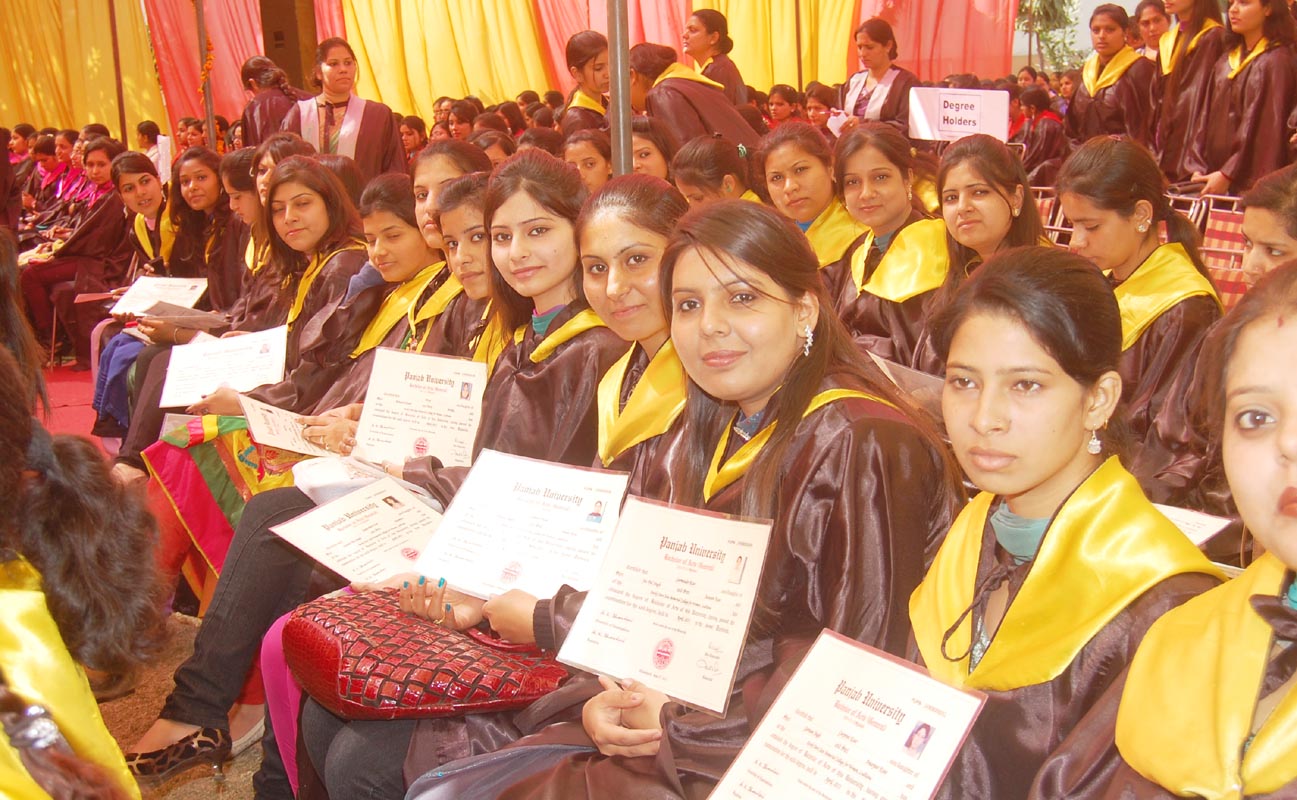
Annual Convocation of DD Jain Memorial College

385 Graduates were awarded the degrees
Annual Convocation of Devki Devi Jain Memorial College was held on March 10, 2012. Dr. C.S. Meena hon’ble Joint Secretary, UGC was the chief guest of the function. 375 Graduates of Arts, Commerce, Computer Applications, M.A.(History and Hindi), M.Sc.(IT) & PGDCA were awarded the degrees. 18 students made the institution proud by registering their names in the book of Roll of honour for their excellent performance in various fields. Mrs. Surinder Dua, officiating principal of the college in her annual report highlighted the achievements of the students in different fields during the session 2010-11 and appreciated the role of teachers and management in the success of the college.
Dr. C.S. Meena, in his convocation address congratulated the pass outs and wished them a bright future. He emphasized the role of education in women empowerment and advised the graduates to feel proud of whatever role they choose to play in life whether it is that of a professional or a home maker.
He further said that UGC sanctions many grants and has introduced various schemes for the benefit of women who are interested in pursuing higher studies. Dr. Amarjit singh Dua, Former Dean College Development Council GNDU, Dr. S.P. Singh Former Vice Chancellor GNDU, Ms. Param Saini, a renowned Clinical psychologist were the guests of honour. Samaj Rattan Sh. Hira Lal Jain, Chairman, Sh. Kedar Nath Jain, President, Sh. Raj Kumar Jain & Sh. Shanti Saroop Jain, Sr. Vice President, Sh. Sheetal Kumar Jain, Vice President, Sh. Bipin Jain, Secretary, Sh. Arvind Kumar Jain, Joint Secretary, Sh. Shiv Desh Bandhu Gupta, Manager (Jain Girls Sr. Sec. School), Sh. Surinder Kumar Jain, Manager (D.D. Jain Memorial College for Women), Sh. Yogesh Kumar Jain, Manager (Atam Devki Niketan), Sh. Amrit Lal Jain, Member Advisory Board, Sh. Yogeshwar Jain, Sh. Naresh Kumar Jain, Sh. Prem Kumar, Sh. Ajit Kumar Jain, Sh. Sachin Jain, Sh. Satinder Jain and other worthy members of managing committee graced the occasion with their benign presence. (Report:Rector Kathuria// Photos:Sanjay Sood)

Annual Convocation of CMC & Hospital


Convocation of 4 CMC Colleges held on with traditional grandeur
Ludhiana, 10th March, 2012 ( Shalu Arora and Rector Kathuria)
 Annual Convocation of Christian Medical College, Christian Dental College, College of Nursing and College of Physiotherapy, Ludhiana was held on 10th March 2012 with traditional grandeur today in the College Campus,       Prof. (Dr.) S.S. Gill, Vice Chancellor, Baba Farid University of Health Sciences, Faridkot was the Chief Guest. He said, “At the outset, let me thank the Institute for inviting me here to participate in this memorable occasion and to distribute the Convocation credentials to merit holders. Your profession is prestigious, with ample scope for growth. You are part of the educated class that society looks up to, for guidance and awareness. On this convocation day, I wish all the young Doctors & Nurses the very best in life and a wonderful future with achievements and I wish they should also treat the poor people.
It is always a pleasure to visit CMC & Hospital and I am delighted to be here with the younger generation of doctors and nurses today. Christian Medical College has a long tradition of pursuing excellence in teaching and research in science. He also appreciated the Christian Medical College & Hospital for its exceptional services in the field of Medical.

Dr. Abraham G. Thomas, Director CMC & Hospital welcomed the gathering, Dr. S. M. Bhatti, Principal administered the Hippocratic Oath to the Graduates and Postgraduates. Fifty five Medical Graduates 25 Postgraduates were awarded the degrees.  Students excelling in various academic activities were awarded Prizes and Medals by the Chairman, Governing Board, CMC Ludhiana.   Geetika Gera, Sebastian Marker, Asha Thomas, Devki Verma, Cynthia Sarah Mathews,  Shrutika Gupta,  Jenni Mariam George, Jibi John , Jincy Mariya Paul were the prominent prize winners.  Dr. Midhila Baby won the gold medal for best intern while Dr. Shubdha Garg was awarded Dr. Jaswant Kaur Gill Memorial award for best outgoing medical resident and Dr. Supriya Sen was awarded Dr. Abraham G.Thomas award for the best outgoing resident in Surgery.  Overview of faculty achievements was presented by Principal, Dr. S.M..Bhatti. The Association of Medical Alumni awarded Life Time Achievement award to Dr. Patience Williams. Dr. V. K. Satija Award for best Clinical Teacher went to Dr. Nitin Batra while batch of 1976 Excellence in Teaching Award went to Dr. Bobby John. Rejul K Raj was awarded Alumni Prize for best all-round graduate.
58 B.Sc. Nursing graduates and 23 M.Sc. Nursing post-graduates awarded the degree on 36th Annual Convocation. Gurwinder Kaur B.Sc. Nursing 1st year, Damanpreet kaur B.Sc. Nursing 2nd year, Navpreet Kaur B.Sc. Nursing 3rd year, Shefali Singla B.Sc. Nursing 4th year secured 1st position in the college.  Gigi M.George secured first position in B.Sc. Nursing Aggregate. Amrinder Kaur M.Sc.Nursing 1st year and Sukhbir Kaur M.Sc.Nursing 2nd year stood first in the College.  Sukhbir Kaur ranked first in M.Sc. Nursing Aggregate. Special prizes were awarded to Shefali Singla for Best Community Health Nurse, Twinkle Mary Paul & Gigi M.George for Best Bed Side nurse and Achsah T.Thampi was awarded for the All Round Best Student Nurse. Pro.Mrs. Ponnamma R.Singh, Principal, College of Nursing congrats all the students.

Dr. Abi M. Thomas, Principal, Christian Dental College presented the college report.  There were 40 BDS and 4 MDS graduates to receive their degrees.  5 students received gold medals.  In the report he highlighted the achievements of the faculty and students in the last year.  Ms. Ashima Razdan was topper in the final Professional BDS examination.    The overall pass percentage in the University examinations for the third and final year BDS was 100%.As part of the goal oriented education, all our students are committed to serve an area of need after their graduation.   At present 35 graduates of Christian Dental College are working in different parts of the country and one at Liberia, West Africa.  The dental students council actively supported the administration in coordinating different programmes.    The Principal highlighted that there were 22 scientific paper presentations, 13 poster presentations, and 22 scientific publications in national and international journals were done by our students and faculty in the last year. 

Dr. Kim Mammen, Associate Director, CMC proposed the vote of thanks.

Wednesday, March 07, 2012

Be aware ….Save The Kidney

Kidney diseases are often detected too late
Photo Courtesy: Health Medical 
Awareness of Kidney Diseases is low with many people totally underestimating the vital role our kidneys play, when in fact kidney damage and disease causes serious morbidity for hundreds of thousands of people, and in some cases leads to death. Chronic diseases – that already account for 72% of the total global burden of disease in people over 30 – will increase by 17% over the next decade; much of this in developing countries like India.
Our kidneys remove toxins and excess water from our blood. They also help to control our blood pressure, to produce red blood cells and hormones, and to keep our bones healthy.
There is a close relationship between kidney diseases, diabetes and hypertension. Worldwide, 246 million people suffer from diabetes and the figure is expected to reach 380 million by 2025. Diabetic kidney disease affects a third of people suffering from diabetes.India has about 50 million diabetic patients and diabetes affects the kidneys in 30-40% patients with renal failure related to diabetes accounting for about 20% of patients on dialysis.  Unfortunately, less than half of those people diagnosed with diabetes undergo a simple screening test for kidney disease.
Kidney diseases are often detected too late, when the patient is already in end-stage renal failure and will need either dialysis or transplantation. Worldwide, over 1.5 million people are undergo dialysis or transplantation and this number is forecasted to double within the next 10 years. In India only a small percentage of people can afford dialysis and transplantation.
A simple way to prevent these issues is to tackle the problem at the source, and ensure early diagnosis of kidney damage by systematically screening people diagnosed with diabetes or hypertension. This can be done with simple and inexpensive urine tests. If detected early, damage can be treated with effective therapies. If diagnosed too late, kidney diseases lead to kidney failure, which entails dialysis and transplantation. 
World Kidney Day
Celebrated worldwide onthe second Thursday of March, World Kidney Day offers a crucial, visible opportunity to inform and educate health policy-makers, people who are at highest risk of CKD, and the general public that kidney disease is common, harmful and treatable.
The Department of Nephrology at Christian Medical College, Ludhiana, will be organizing a Kidney Health Camp in the nephrology OPD from 8 - 11 AM on 10th March, 2012, which will include free registration, nephrology and diet consultation, screening urine and blood tests, health education and awareness promotion.Please feel free to check your kidneys especially if you are diabetic, have high blood pressure, smoke, use regular pain medications, are above 40 years of age or have a close relative with diabetes or kidney disease.
For Further Details Please Contact  Dr.Jasmine Das: 9988345898
by Shalu Arora and Rector Kathuria

Monday, March 05, 2012

World Stroke Campaign International Committee

CMC Neurologist DrJeyaraj nominated as Chair
Ludhiana::(Shalu Arora and Rector Kathuria): DrJeyaraj D Pandian, Professor and Head of Neurology at Christian Medical College, Ludhiana has been nominated as the Chair of the World Stroke Campaign (WSC) International Working Committee.DrPandian took this responsibility during the recent board meeting of World Stroke Organization (WSO) held in New Orleans, USA.   Talking about the new position, DrPandian stated that he felt honored to take up the post as a first Asian/Indian. He mentioned that the WSO/WSC has been involved in improving the public awareness of stroke across the world over the last 2 years with the major theme “1 in 6”. One in 6 people worldwide will have a stroke in their life time, but stroke is preventable. DrPandian elaborated on the role of WSC in providing education and support for stroke survivors, family members and the health professionals involved in their treatment. The main focus of WSC is the annual World Stroke Day which is observed on 29th October every year. He discussed that the public awareness activities in India had increased over the last 2 years.
DrJeyaraj D Pandian also gave an invited talk at the International Stroke Congress which was held in New Orleans, USA from February 1st to 3rd. The special symposium was arranged jointly by the American Stroke Association, World Health Organization and World Stroke Organization.DrPandian is privileged to be the first Indian Neurologist to be invited to give a talk at the International Stroke Congress. He discussed about the rising burden of stroke in low and middle income countries like India and how to face the challenge.
Stroke or brain attack occurs when there is a blockage due to a clot in one of the arteries in the brain or when the artery bursts that would lead to brain hemorrhage. DrPandian briefed that 80% of the time stroke occurs because of high blood pressure, high blood sugar, high cholesterol, smoking, heavy alcohol drinking, unhealthy eating and lifestyle habits. He reemphasized that stroke is a preventable and treatable disease.
DrYashpal Singh Professor of Neurology at CMC Ludhiana said that stroke symptoms can be easily recognized. Patients present with sudden paralysis in one side, sudden trouble speaking, sudden deviation of face, sudden giddiness, loss of vision etc. It is important that patients recognize these symptoms. If they reach CMC within 4 ½ hours they can receive a clot bursting drug called rtPA which can dissolve the clot. He added that in the Comprehensive Stroke Program at CMC over the last 3 years 42 patients have received this particular drug. There is a 24 hour brain attack team available to evaluate these patients. (March 4, 2012)

Thursday, February 23, 2012

Launch of the Virtual Labs

A collection of ninety-one virtual laboratories
The Union Minister for Human Resource Development and Communications and Information Technology, Shri Kapil Sibal launching the Virtual Labs under National Mission on Education through Information and Communication Technology (NMEICT), in New Delhi on February 23, 2012. (PIB photo) 23-February-2012
The  Union Minister for Human Resource Development, Government of India today launched Virtual Labs—a collection of ninety-one virtual laboratories containing hundreds of experiments in nine disciplines of science and engineering. As part of Ministry of Human Resource Development(MHRD)’s National Mission on Education through Information and Communication Technology (NMEICT), Virtual Labs is part of a comprehensive undertaking to provide easily accessible and high quality education throughout India.

Virtual Labs’ primary focus is to provide graduate and undergraduate college and university students with the ability to perform their required laboratory experiments using only the World Wide Web, a standard computer, and an Internet connection. Virtual Labs allow students to practice and better learn the science and engineering behind the experiments that they are required to perform. Virtual Labs also allows the sharing of costly equipment across the country, and in very rural areas, students will be able to perform experiments that they would not otherwise be able to access.

Nearly 300 department heads, faculty, and staff representing 152 institutions have been trained across India. Over 20 Nodal Centres have been created, institutions who have expressed their interest to champion Virtual Labs in their organisations and geographical areas.

The Pilot Phase of the Virtual Labs project started in April 2009.  During this phase, approximately twenty labs were developed as proof of concept.  The Main Phase began in April 2010.  So far, over 80 Virtual Labs have been developed, and are undergoing field trials in various parts of the country.

Two types of virtual labs have been developed under this project. In the Simulation Based Virtual Labs the experiments are modeled using mathematical equations.  The simulations are carried out remotely at a high-end server, and the results are communicated to the student over the internet.  Simulation based Virtual Labs are scalable and can cater to a large number of simultaneous users.

Using the Remote Triggered Virtual Labs the actual experiments are triggered remotely.  The output of the experiment (being conducted remotely) is communicated back to the student over the internet.  This class of Virtual Labs gives the student the output of real-time experiments.  Typically, time-slots are booked before conducting such experiments.

All Virtual Labs can be accessed through a common website:  www.vlab.co.in . At the user end, a PC and broadband connectivity enables the user to access Virtual Labs.

These Virtual Labs will be very useful for Engineering College Students who do not have access to good lab-facilities, High-school students, whose inquisitiveness will be triggered, possibly motivating them to take up higher-studies, Researchers in different institutes who can collaborate / share equipment and engineering colleges, who can benefit from the content and related teaching resources.
Currently 85 Virtual Labs have been developed comprising of 769 experiments. Trainings and workshops have been held all over India to disseminate knowledge of these Virtual Labs. Future efforts will involve development of virtual labs in different subjects and wide dissemination of this knowledge.

A Collaborative Platform for Development of Virtual Labs has been created that assists the faculty with authoring and maintaining Virtual Labs. The platform hosts over 825 experiments developed by many of the partner institutions. The Collaborative Platform provides the server side architecture for ensuring that virtual labs run securely, can effectively serve thousands of students simultaneously, and reserve time slots for experiments that require scheduling. The Collaborative Platform also provides tools to help teachers monitor their students’ progress and make changes to the instructional material.

Student interest in Virtual Labs has also been enthusiastic. The Virtual Labs site (vlab.co.in) has had 233,570 site visits and 1,034,443 page visits in just the last 6 months. There are over 4500 registered users from 134 countries and handles around 100GB of traffic per month with visitors from India, United States, Malaysia, Philippines, United Kingdom, Australia, Canada, Germany, Pakistan and so on.

With the launch of Virtual Labs Indian students will have easy access to an encyclopedia of science and engineering knowledge presented in a way that is engaging, immersive, and enjoyable. Virtual Labs will allow students to explore, discover, and learn wherever they are and at their convenience.

List of Virtual Labs that are ready
A.        Electronics & Communications      
·         Virtual Advanced Lab for Interactive Design and Test in Electronics
·         Virtual Microwave Laboratory
·         Wireless Lab
·         Engineering Electro-magnetics Laboratory
·         Queuing Networks Modelling Lab
·         Hybrid electronics Lab
·         RF microwave characterization Lab
·         Transducer and instrumentation virtual lab
·         Electronic design using DSP,FPGA,CPLD and Micro controllers through simulation and direct access of the hardware
·         Digital Electronic Circuits Laboratory
·         Digital Signal Processing Laboratory
·         Fading Channels and Mobile Communications
·         Basic Electronics
·         Systems, communication and control laboratory
·         Speech Signal Processing Laboratory
·         Digital VLSI Design Virtual lab
·         Signals and Systems Laboratory
·         Electromagnetic Theory
·         Virtual Electric Circuits
      
B.        Computer Science & Engineering      
·         Problem Solving
·         FPGA & Embedded systems lab
·         Computer Architecture & organization
·         Advanced Network Technologies
·         Software Engineering
·         Data Structures
·         Computer Programming
·         Data Mining
·         Databases
·         Computer Organization
·         VLSI
·         Digital Logic Design
·         Speech Signal Processing
·         Mobile Robotics
·         Computer Graphics
·         Image Processing
·         Pattern Recognition
·         Artificial Neural Networks
·         Virtual Advanced VLSI Lab
·         Cryptography Lab

C.        Electrical Engineering      

·         Sensors Modeling & Simulation
·         Industrial Automation Laboratory
·         PLC
·         Analog Signals, Network and Measurement Laboratory
·         Real Time Embedded Systems Laboratory
·         Electrical Machines Laboratory
·         Creative Design, Prototyping & Experiential Simulation Lab
·         Ergonomics Lab for Assessing Physical Aspects of Design
·         Virtual English and Communication
·         Virtual Anthropology Lab

D.        Mechanical Engineering
·         Metal Forming Lab
·         Vibration and Acoustics
·         Micromachining laboratory
·         Kinematics & Dynamics of Mechanisms
·         Mine Automation and Virtual Reality

E.         Chemical Engineering     
·         Process control, reaction engineering and unit operations lab
·         Chemical Engineering
·         Simulation of Control of Magnetic Levitation System
·         Virtual Lab for Mass Transfer

F.         Biotechnology and Biomedical Engineering   
·         Bioreactor Modeling & Simulation lab
·         Biomedical and Signal processing Laboratory
·         Virtual Proteomics Laboratory
·         Neurophysiology (pilot)
·         Neuron Simulation Lab (pilot)
·         Biochemistry Virtual Lab I
·         Biochemistry Virtual Lab II
·         Population Ecology I
·         Population Ecology II
·         Immunology Virtual Lab I
·         Immunology Virtual Lab II
·         Microbiology Virtual Lab I
·         Microbiology Virtual Lab II
·         Molecular biology Virtual Lab I
·         Molecular biology Virtual Lab II
·         Cell biology Virtual Lab I
·         Cell biology Virtual Lab II

G.        Civil Engineering
   
·         Strength of Materials Lab
·         Fluid Mechanics Lab
·         Soil Mechanics Lab
·         Basic Structural Analysis Lab
·         Surveying Lab

H.        Physical Sciences     
·         Physical sciences
·         Virtual Advanced Mechanics Lab
·         Virtual Optics Lab
·         Virtual Electricity & Magnetism Lab
·         Virtual Heat & Thermodynamics Lab
·         Virtual Modern Physics Lab
·         Virtual Harmonic Motion and Waves Lab

I.          Chemical Sciences      
·         Analytical Lab
·         Virtual Chemistry Lab
·         Virtual Lab in “Charge and Particle size Determination in Colloidal Systems”
·         Virtual Lab in “Absorption Spectroscopy”
·         Virtual Lab in “CD Spectroscopy”
·         Physics of Biomolecules
·         Physical chemistry lab
·         Physical Chemistry
·         Organic Chemistry
·         Inorganic Chemistry
                                                                          

Monday, February 20, 2012

PM’s address

The Golden Jubilee of Indian Agricultural Research Institute
The Prime Minister, Dr. Manmohan Singh presents the IARI Merit Award to Ms. Patil Tejaswini Balasaheb, at the Golden Jubilee Convocation of the Post Graduate School of the Indian Agricultural Research Institute, in New Delhi on February 20, 2012. The Director, IARI, Dr. H.S. Gupta is also seen. [PIB photo]20-February-2012
The Prime Minister, Dr. Manmohan Singh addressed the Golden Jubilee of Indian Agricultural Research Institute in Delhi today. Following is the text of Prime Minister’s at address on the occasion:-

“I am delighted to participate in the Golden Jubilee convocation of the Indian Agricultural Research Institute. I congratulate all those students who are receiving their degrees today, particularly those who are being recognized for their outstanding achievements. I wish them all the very best in their future pursuits. 

Our government has always recognised that a prosperous, productive and sustainable farm economy is the corner stone of equitable and inclusive growth of our country. We have therefore pursued policies to bring about a comprehensive reform and revitalisation of our agrarian economy. 

We have adopted a multi-pronged strategy to improve returns to farming and step up investment in rural infrastructure. Our flagship programme Bharat Nirman has focussed on increasing investment in rural roads, rural electrification, irrigation, rural housing and rural communications. Over the past seven years we have engineered a shift in the terms of trade in favour of agriculture by raising significantly support and procurement prices. We financed a massive debt write off for indebted farmers of our country. We launched the Mahatma Gandhi National Rural Employment Guarantee Programme which is both a safety net for the poor and also a powerful instrument for undertaking works that will enhance land productivity. We launched the Rashtriya Krishi Vikas Yojana and the Rainfed Areas Development Programme. 

These policies have begun to pay off. We have reached new plateaus in foodgrain production. Food production at the end of the 11th Plan will exceed 250 million tonnes, an all time record. Our pulse production, at 18 million tonnes, is well about the previous barrier of 15 million tonnes. We are producing today more milk, more fruits, more vegetables, more sugarcane, more oilseeds and more cotton than ever before. Last year production of vegetables went up by 9.57% and nearly 2 million tonnes of cold storage capacity was created. 

It now looks as if agricultural growth is likely to be about 3.5% per annum during the 11th Five Year Plan which is much better than in the 10th Five Year Plan. This is a commendable achievement but we must improve upon it in the Twelfth Plan to reach 4 percent growth or even higher. This will call for very determined effort on the part of both the central government and the state governments ranging over many areas including investment in irrigation, investment in watershed management, provision of credit, provision of marketing support etc. One of the key elements in that effort must be the contribution of agricultural research and I would like to use this opportunity to focus on this area. 

I am aware that at any given time there is a gap between the yield per hectare that is observed in the field and the yields that can be achieved under ideal farming conditions. That difference is quite substantial at present and it represents the failure of the system to exploit the yield potential which our scientists have given us. In the short run it is the job of the administration to close this gap and our agricultural strategy must give high priority to this effort. This is not the job of research scientists but it does involve close collaboration between our scientific and technical manpower and the administration on the ground. We must do better in this area than we have done thus far. 

One of our major concerns has been the worry that our extension services system is no longer sufficiently robust. The First Green Revolution was carried out on the back of an effective rural extension and research infrastructure. The joining of hands between panchayats, rural agricultural staff, agricultural scientists and district level officials created the foundation of a robust extension services system. The Indian Agricultural Research Institute and state level institutions were very much a part of this system. 

We need now to revitalise this infrastructure of support at the district level. The Krishi Vigyan Kendras which now cover virtually the entirelength and breadth of the country and Agricultural Technology Management Agencies (ATMA) have to play a major role in this process of revitalization and transformation of extension network. 

Looking beyond the application of known technology, our farm economy needs much greater injection of science and a knowledge-based approach to increasing incomes and productivity. Both land and water are limited and it is vital that we make progress in agricultural technology which raises land productivity while also allowing a significant reduction in water use per unit of agricultural output. We need to develop varieties which can ensure high yield while economising on water and are also capable of withstanding water stress. This is as true of crop production as for livestock. We need to develop improved breeds which can flourish in our agro climatic conditions and do not require high value inputs which our farmers cannot afford. 

This depends critically upon the health and vitality of our agricultural research system, centring on the ICAR system and state agricultural universities. We owe a great deal to our scientists for what we have achieved in the past. It is due to the dedicated work of our agricultural scientists that we were able to overcome those constraints. I am very happy that Dr. M.S. Swaminathan the father of the Green Revolution in our country is very much present here. But we should not rest on our laurels. We have a long way to go down this road if we want to assure our farmers of prosperity from the fruits of the land they till. 

The National Agricultural Research System needs to be further strengthened to meet the challenges of the years ahead. One requirement of this is the adequacy of financial resources. Our Government is committed to raising R&D spending as a whole to at least 2% of the GDP by the end of the XII Plan from the current level of about 1%. Given the importance that agriculture has in achieving our national goals, we have to ensure that a significant proportion of increased R&D spending is directed to agriculture and related activities.

Resources are only one part of the solution. I also feel our agricultural research system needs to look inward to see whether it is keeping up with developments globally. We had established two Committees to examine the system and make recommendations on how to strengthen it. One of these Committees was headed by Dr Mashelkar and the other by Dr Swaminathan. We need to review the implementation of the recommendations of these committees to see whether all the recommendations they made have been implemented in letter and spirit. 

I am particularly keen to ensure that research funding is based on clearly defined research goals which are linked to achieving productivity increases in the field. This calls for a system which focuses on basic research at one end but also encourages a spectrum of activity translating basic research to the development of varieties that meet the needs of our farmers given the circumstances in which they have to operate and their resource constraints.

While the public sector needs to take the lead we also need much greater private sector investment and involvement in agriculture, particularly in R&D. Indeed, it is unlikely that the goal of 2% of GDP in research can be achieved unless a significant part of this is financed by the private sector. Further, greater integration of the agricultural, industrial and Science and Technology sectors of our economy alone can yield large productivity gains based on new innovations and technologies. 

We need to promote structured public private partnerships, to foster better synergy among institutions and disciplines. However, for this to happen on an adequate scale, we need to expand the mode of scientific research by funding not just institutions but also research platforms that cut across institutions. Individual researchers and research groups, whether in the National Agricultural Research System, universities, CSIR, scientific establishments or the private sector, should be enabled to form platforms for joint research in key priority areas. These should be funded subject to quality peer review. I am therefore happy that the Indian Council of Agricultural Research has proposed some extra mural funding along these lines in the XIIth Plan. 

The institutionalization of an intellectual property rights regime is important for this to happen. Not only must our scientists be rewarded for their innovative work, but an effective IPR regime will also facilitate research partnerships on the basis of sharing of costs and benefits in the larger interest of our economy and society at large. For example, the public sector has invested in a very large collection of genetic material which is of value to private seed producers. Commercial arrangements could be worked out for use of such knowledge, whose proceeds could be ploughed back into scientific research for public good. 

In this context, we must never forget that linkage with farming communities is vital to enhance the efficiency and productivity of our agricultural research system. This would help to blend modern science with traditional knowledge and make the system more responsive to the felt needs of our farmers. 

Special attention needs to be paid to the role of women in the farm sector. Women have historically been the source of much traditional knowledge. Thus special efforts have to be made to make the entire R&D chain more gender sensitive and give priority to technological options that reduce the drudgery of women working on the farm.

As we go forward, we have to keep in mind not only the increase in demand for food but the changing composition of that demand. It is estimated that we would need an addition of nearly 50 million tonnes of food grains in the next 10 years to meet domestic demand. Increased production of foodgrains is certainly an important plank of food security and our efforts to rid the country of the scourge of malnutrition. 

But proper nutrition also requires a balanced diet. We would need to produce more fruits & vegetables and protein rich products such as milk, eggs, fish and meat. The demand for these products is expected to grow substantially with rising incomes and changing dietary habits and preferences. Therefore we have to pursue a multi-pronged strategy which seeks to boost productivity and production through product-specific interventions. 

I have already mentioned the need to deal with the threat of climate change. Climate change and rising demand for commercial energy are expected to have a significant impact on agriculture in India. Rise in energy demand and continued dependence on fossil-fuel based energy will lead to higher costs of cultivation and also lead to increased carbon emissions. 

I am happy to learn that IARI has recently set up a new Centre for Environment Science and Climate Resilient Agriculture to address these issues. 

I was a student, like many of you here, in the difficult years of the 1940s and 1950s. Times have changed and we have overcome the fears that plagued our nation at that time. But your generation faces even bigger challenges. We achieved higher agricultural productivity through means that used water very intensively and relied heavily on chemical inputs. And we did not have a looming concern on climate change. Your generation has to tackle all these tasks. Fortunately our economy is now much stronger and we are in a position to support research much more than was the case earlier. I assure you that we will do our bit. The glorious history of institutions such as the Indian Agricultural Research Institute, and the quality of the young minds being trained in it today shows that we have the intellectual and institutional capacity to overcome all challenges. I wish each one of you well in your chosen careers and I have no doubt that you will make a major contribution to creating the new green revolution in the years that lie ahead. May your path be blessed.” [PIB] 20-February-2012 11:40 IST  ***