Showing posts with label Women. Show all posts

Wednesday, December 11, 2019

Holiday Message Sgt. Sarah Meadows

Writing a Holiday Greeting on a Box of Humanitarian Aid
Holiday Message
Air Force Staff Sgt. Sarah Meadows writes a holiday greeting on a box of humanitarian aid at Andersen Air Force Base, Guam, Dec. 10, 2019, before delivering it as part of Operation Christmas Drop. The annual operation provides donated goods to islanders throughout Micronesia.
Photo By: Air Force Senior Airman Ryan Brooks

Sunday, December 30, 2012

A time for action-says letter from Namita Bhandare

Sun, Dec 30, 2012 at 12:43 PM
We have a long fight ahead. But we will win
Photo courtesy Facebook
Dear Rector,
Yesterday was a sad day as we woke up to the heartbreaking news of the death of the 23-year-old medical student who was subject to a brutal gang rape, beaten and then dumped on the road on the night of December 16. 
Today, we share the same feelings of sorrow, hopelessness, anger and frustration. Yet, I believe that while this is a time for grief, this is also a time for action. This is a time to say: enough. 
Our petition has gathered over 88,000 signatures. It is important to make every voice count and to send a strong message that we will not continue to tolerate sexual violence against women. 
Tomorrow, at 10 am, I am going to the office of Justice J.S. Verma who is the head of a three-person committee that will submit its findings and recommendations on issues of safety of women. I will be submitting our petition with all the signatures (yes, all 2,700+ pages!). 

It is important to keep this campaign going. I am writing to you once again to request you to sign this petition and forward this email to your friends and family.

The Justice Verma Commission is accepting submissions until January 5. We don't have a lot of time. If you would like to make additional suggestions, please leave a comment as 'reasons for signing this petition'. I will be collecting all the comments and submitting them to the committee.

We have a long fight ahead. But we will win. 

With warm regards,

Namita Bhandare via Change.org
A letter from Namita Bhandare 
PS:  Help us reach out to more people by forwarding this email to your friends or share it on Twitter and Facebook.

Sunday, December 23, 2012

An open debate on violence against women at Ldh

Sat, Dec 22, 2012 at 11:26 AM
A bill must be passed in parliament at earliest
such crimes are generally committed by the well connected people
LUDHIANA, 21 December 2012:A comprehensive strategy has to be evolved through administrative, socio political and judicial measures to combat the inhuman menace of violence against women. This was the consensus arrived at after open debate on violence against women organized by the All India Working Women Forum (AITUC), Punjab Istri Sabha and Bharat Jan Vigyan Jatha Ludhiana today at Shaheed Karnail Singh Isru Bhawan Ludhiana. Dr Narjit Kaur –Convener of the forum said that it was heartbreaking and sobering to read the morning papers and realise how low we have fallen as a society and as human beings. A group of drunk middle aged men raped a young physiotherapist and brutally assaulted her and her boyfriend. Even if the girl survives her physical injuries, the mental scars she bears may not be erased for a lifetime. What sort of wicked and depraved men they must be to so casually and easily rob the joy and health of a harmless young girl at the threshold of womanhood and life and reduce her and her family to utter despair?

Mrs.Gurcharan Kochar – President Punjab Istri Sabha Ludhiana cautioned that it brings us to the urgent question of what needs to be done to prevent more of our daughters being deprived of their happiness, esteem, health and often, their lives. To act strongly and firmly. The female foeticide, honour killings and discrimination against the girl child are a reflection of  gender bias prevailing in the society. This needs to be condemned  and corrected.

Dr Arun Mitra – General Secretary Bharat Jan Vigyan Jatha said that such crimes are generally committed by the well connected people who feel that they will go scot free after committing the crime. The economic gaps which have increased in the last about two decades have further marginalized the already deprived section of the society who have become more vulnerable to violence.

The meeting proposed following measures to meet the situation.

1.      All concerned men and women holding any position of authority and whose voice can be heard  by many, should publicly express their outrage and concern.

2.      A bill must be passed in parliament at the earliest wherein the outcome of rape cases must be decided within 45 days by a fast track court. Strong punishment must be meted out to the rapist and he must be publicly humiliated.

3.      Police reforms must be undertaken immediately. Political intervention in the police must stop.  If any police station refuses to register a complaint of rape, there must be a strong and well -defined punishment for the concerned officer.

4.      Laws in relation to sexual harassment at workplace should be enacted in consultation with women orgnaisations.


There should be one page devoted in the daily newspapers to women’s safety. This page should exclusively list crimes against women. Detailed identities and addresses of culprits involved, photographs and daily progress on brutal cases (ie who has been apprehended as yet, what punishment has been given etc)

5.      All employers should make their own  workplaces  as safe as possible for women.

6.      There should be several options for safe travel for women including exclusive buses and taxis, train compartments and plenty of well-lit public toilets. These should have female staff manning them as well.

7.      All parents, when rearing  their children, should place a very strong emphasis on not letting them use violence. Gentleness must be inculcated from the start in boys especially.

8.      All schools should make self- defence, especially for girls , a mandatory part of the curriculum.

Others who spoke at the meeting include Maj. Sher Singh Aulukh – President BJVJ, M.S.Bhatia – Organising Secretary BJVJ, Jit Kumar – General Secretary Punjab Istri Sabha Ludhiana, D.P.Maur – General Secretary Joint Council of Trade Unions Ludhiana.  

 An open debate on violence against women at Ldh

Saturday, October 20, 2012

Military Works to Prevent Domestic Violence

Sat, Oct 20, 2012 at 12:25 AM
"Educating the community is really important,"
By Lisa Daniel
American Forces Press Service

WASHINGTON, Oct. 19, 2012 - The Defense Department and each of the services are drawing attention to the plight of domestic violence because of people like Amanda Tenorio, a victim advocate for Army Community Services at Joint Base Henderson Hall, Va., and a domestic violence survivor.
Click photo for screen-resolution image
Robin Harris, right, volunteer coordinator with Bethany House in Northern Virginia, speaks with Amanda Tenorio, Fort Meyer, Va., victim advocate and domestic violence survivor, at her informational booth during Fort Belvoir's resource symposium on domestic violence prevention, hosted by the Army Community Service Family Advocacy Program, Oct. 4, 2012. U.S. Army photo by Brittany Carlson
 

Tenorio was a 28-year-old divorced mother of two when she started dating a man who quickly turned violent with her. In their year-and-a-half relationship, she said, she sustained regular beatings that caused 35 broken bones in her face, a broken hip, ankles and ribs, dislocated knees and brain injuries that put her into a coma.Tenorio and other domestic violence survivors are speaking out at installations as part of Domestic Violence Awareness Month, a national designation in October to bring violence among couples out of the shadows of their homes and into the help of military family advocacy programs.
"Educating the community is really important," Tenorio said in a recent American Forces Press Service interview. "A lot of people know someone in that situation, but they don't know how to handle it."
Kathy Robertson, the department's Family Advocacy Program manager, said the programs, which are on all military installations and include more than 800 clinical social workers, are designed to help couples through problems before they turn violent, but also respond to emergencies that require health care, police and shelter interventions.
"Our whole focus is on treatment and intervention and trying to help both the victim and the abuser," she told AFPS.
The services are focused on training all leaders, from platoon sergeants to installation commanders, Robertson said, to recognize problems and encourage help before violence occurs.
Military leaders and domestic violence workers worry about increases in domestic violence during what is a volatile time for Americans, Robertson said. People in stressful situations, whether related to the economic recession, military downsizing, or dealing with the aftermath of combat are at greater risk for violence, she said.
"War doesn't necessarily make you more violent, but it does change you," she said. "And we're all very concerned about this financial situation. When you lose your job and your mortgage has gone under and you're just making ends meet, things can get out of hand."
Case workers are trained to help manage stressful situations before they boil over, Roberston said. They start with a safety assessment of the couple, then tailor intervention to meet their needs, she said. Treatment may mean learning how to talk through problems, practicing taking a "time out" when angry, or swearing off alcohol, which makes some people more violent, she said.
"Everyone has rough times in a relationship. We want to help them get those communication skills to work with each other."
If violence has occurred, it can be reported to a family advocacy office either as a "restricted" report, which means the command and police will not be notified, or "unrestricted," which means they will, Robertson said. A restricted report is kept confidential except in cases in which an advocate determines a victim is in imminent danger, she said.
Robertson stresses that family advocacy programs are not involved in discipline and a report of domestic violence to a commander doesn't necessarily mean a service member will be disciplined. "What the commander often does is take that service member out of the home for 72 hours just to keep [the victim] safe," she said. An abuser who shows concerted effort to get better "goes a long way" in a commander's decision about discipline, she added.
In fiscal 2011, military family advocacy social workers supported 14,237 people in response to domestic violence reports. Victim advocates worked with 18,055 during that time, Defense Department records show. The family advocacy program, Military OneSource, and military family life counselors supported many more who sought help without a report being filed, Robertson said. She also noted that half of all reported cases were from a female service member abused by a civilian man.
Domestic violence cases involving a service member or one of their family members usually are handled in the civilian system if they happen off base and military family advocates also coordinate for services in the civilian system, such as temporary shelter, which the military does not provide, Robertson said. Victim advocates are available 24/7 -- many are personally familiar with domestic violence -- and have worked with the civilian system, she said.
Tenorio, an Army contractor whose case did not involve the military, uses herself as an example to break down stereotypes of domestic violence victims. "Everybody has an image of a poor, uneducated, drug abuser," she said.
In fact, Tenorio has a bachelor's degree in social work and sociology and worked as an intern in domestic violence. The fact that she didn't see the relationship for what it was underscores the denial and rationalization that happens with domestic violence, she said.
"I was aware it was domestic violence, but I was not calling it that in my mind," said Tenorio, who was working as a travel agent in the Washington, D.C., suburbs after taking several years off to be home with her children.
Eventually, Tenorio said, "I reached point where I knew this was not going to get better." She recalled what a frustrated police officer told her when she wouldn't cooperate to get her abuser locked up: "The next time this happens, one of you is going to end up dead."
"I didn't want it to reach that point where I was dead and he was in prison," she said. "I was to the point where I would rather go to prison, but I never got to the point, mentally, where I could see myself killing him."
Far from killing him, Tenorio said, she didn't even fight back -- until the end -- because even blocking a blow in self-defense would agitate him more. "If I did nothing, his aggression would die down quicker," she said.
Looking back, Tenorio said, she sees "classic red flags" from the start of their relationship: his jealousy, possessiveness, talking down about her while inflating himself, and a temper that exploded over things like lost car keys or her cell phone ringing.
The violence started three months in and followed what Tenorio and Robertson say are classic domestic violence patterns of abuse followed by "honeymoon" periods of perceived remorse by the abuser: apologies, professions of love, and promises of change.
But, Tenorio said, as the relationship went on, the honeymoon periods were replaced with accusations of "Why do you make me do this to you?" or outright denial. "He asked me, 'Who did this to you?'" she said.
Control often is a centerpiece of abusive relationships, Tenorio said, and hers was no different. "If he saw that he was losing control of me, that would set him off."
Tenorio said victims often feel isolated, as she did. She lived with her abuser and was fairly new to the area and had no local family, while he had a network of support in parents and friends.

Much of the abuse took place in public and, while most witnesses ignored it, some called police, Tenorio said. In one instance, local police pressed charges, but Tenorio agreed to go along with a lie her abuser and his mother concocted to have the charges thrown out, she said.

"I told [police] we got in a fight and I just want my things and want him to go and leave me alone," she said. "But it's never that easy. It's easy to say it, but with classic abuser, that's losing control of me and he wouldn't allow that."
"I thought the best thing for me to do was to stay on his good side," she said.
Tenorio said she had little faith in police and courts because her abuser had a history of criminal problems and had gotten out of all of them. Each time they separated, he always found her, even when she moved, she said.
Perhaps the worst abuse Tenorio describes was a two-day ordeal in which her abuser bound, gagged and blindfolded her in a chair in a motel room, then poured gasoline around the room, promising to set it ablaze if she upset him. He eventually released her, but after another beating and a series of events involving her trying to escape and some witnesses attempting to help, she said, he drove them out a long, dark road at night repeatedly smashing her head against the windshield and passenger window until they broke. She managed to get into a convenience store when he stopped for gas and the cashier locked the door behind her and called 9-1-1. Tenorio laid down on the store tiles and slipped into a coma. She awoke in a hospital two days later, she said, with a name plate that said "Carla Doe."
Still, Tenorio stayed with her abuser a year longer, even nursing him back to health after he was shot in a drug deal, and suffering more beatings until finally escaping and calling police. She was taken to a domestic violence shelter and her abuser was put in jail without bail, she said.
Tenorio's abuser is serving a 15-year sentence in a Virginia prison and recently was extradited to Maryland to face multiple felonies next month related to the violence that put her in a coma, she said. With the help of a local police domestic violence officer, she rented a new home, got a new job as a program manager while volunteering with civilian domestic violence groups. She also gained custody of her two children and last summer began working for the Army's victim advocate program.
"I think everything played out for me the way it was supposed to," Tenorio said. "The detective knew what was going on from the first time she saw me, but she knew I was in victim mode and something just had to click in my mind" to leave the relationship.
With her social work degree, her personal struggles and her understanding of the system, Tenorio is passionate about helping others. "It sounds so easy to say 'just leave,' but you can't really comprehend someone's fear until you've been through it," she said.
Tenorio's experience shows how domestic violence is complicated by the psychological state of the victim and the abuser, Tenorio and Robertson said. Getting a protective order may seem obvious, but it often leads to more violence, they said.
Robertson said she is glad to have Tenorio and other survivors of domestic abuse as part of the military's family advocacy program. "Domestic violence is hard," she said, and advocates must understand the complexities.
"You can help them leave, but victims still have a tie to that person," she said. "There's a whole cycle of the honeymoon period and the flowers and the 'I'm-so-sorries.' It's a very vicious cycle."
Early intervention by family advocates can prevent violence, Robertson said. And, she said, bystanders can help, too.
"Let that person know there are resources out there," she said. "Acknowledge that you heard something [or saw something], and let them know there is help." Military Works to Prevent Domestic Violence
Related Sites:  
Military OneSource
Sexual Assault Prevention & Response
Rape, Abuse & Incest National Network

Thursday, January 12, 2012

Smt. Krishna Tirath addressing a press conference

The Minister of State (Independent Charge) for Women and Child Development, Smt. Krishna Tirath addressing a press conference, in New Delhi on January 11, 2012.

Friday, November 11, 2011

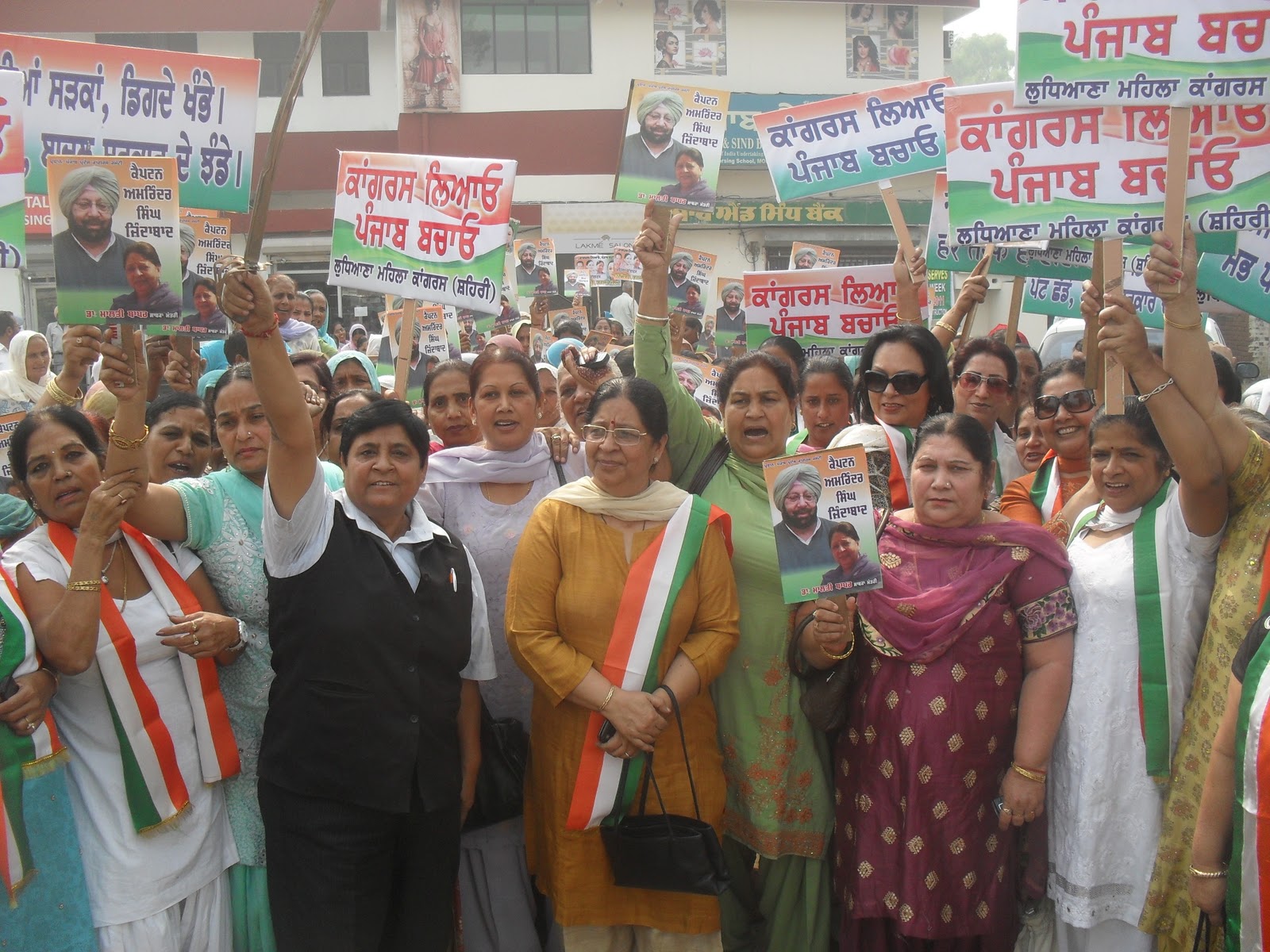
Mahila Congress Pb to organize 4 state level rallies

Dr Malti Thapar directs all Mahila Congress units to be in party discipline
Chandigarh// November 10, 2011//Kalyani Singh
Mahila congress Punjab will organize four state level rallies at Ropar, Kapurthala, Dharamkot and Amritsar in the month of December which will be adrresed by Smt Anita Verma, President, All India Mahila Congress. This was stated by Dr Malti Thapar after chairing the first meeting of the mahila congress. Dr Thapar also announced the formation of state body within next fortnight with 2 senior vice presidents, 7 vice presidents, 7 general secretaries, 7 secretaries, 1 organizing secretary, 1 treasurer, 1 media advisor, 1 office secretary, 11 executive committee members and joint secretaries.  Three Zonal rallies to be addressed by Incharge Punjab affairs Dr. Anita Babbar at Hoshiarpur, Patiala and Gurdaspur.
Dr Thapar directed the mahila congress workers to ensure maximum participation of the mahila workers in the ongoing Punjab bachao rallies being organized by Pradesh congress. She also asked the mahila workers to work for the coming vidhan sabha elections and work with the senior party to ensure the victory.

Wednesday, November 02, 2011

Punjab Bachao Yatra

Thousands of Mahila Congress workers gather at Moga
Mahila Congress Pb.to launch 24 hour help line 
A step taken for women of Punjab: Dr Malti Thapar 
Moga:November 2, 2011

Mahila Congress Punjab will shortly start a 24 hour helpline at Congress Bhawan Chandigarh for the women of Punjab who are harassed and tortured at the family or social or administrative or political level. Stating this as a historic step, Dr Malti Thapar, President, Mahila Congress Punjab said that Mahila congress will provide moral and legal support to such females who are deprived of their rights in any way. This 24 hour helpline number will be intimated to the general public through media. Dr Thapar announced this today at Moga, while she was speaking at the rally held on the second day of Punjab Bachao yatra.
Dr Thapar said that number of cases of atrocities on the women have increased manifold during the last four and half years of this Akali Dal Badal and BJP rule. The crime rate in Punjab has gone up leaving behind Bihar also. Women in the state are feeling insecure and unsafe in the goondaraj of Akali Dal Badal. Everyday the silent protesting teachers or the Aangan vaadi workers are picked up by the Punjab police on the directions of S Sukhbir Singh Badal, who is the home minister also, and beaten mercilessly in front of everybody. 
Dr Thapar questioned S Harsimrat kaur Badal, MP that What is the use of just grabbing cheap publicity by holding daughter of poor people and branding it as “Nanhi Chaan”? Can the present regime give any authenticated data on the female foeticide in the state during the last four years?Dr Thapar assured the president PPCC, Capt Amarinder Singh that Mahila Congress will be his right hand in the coming vidhan sabha elections and will fight with the Pradesh Congress to throw this government out of power. Dr Thapar requested Capt Singh that while drafting the manifesto special attention should be given to the issues relating to the women of Punjab.
Dr Thapar pointed to S Parkash Singh Badal, Chief Minister of Punjab that by making cancer specialization hospitals in Malwa belt won’t serve the purpose of common man, come to Dharamkot and see where Punjab is going? For the last 15 years Akali Dal has ruled in this constituency but S Parkash Singh Badal should see the plight of the people there. There is no school, college, hospital, roads or transport. People are living in pitiable conditions without even safe drinking water and electricity. Old age pensions and shagun schemes are also not being distributed by the government. Even the money to be given in the MNREGA is not being paid to the workers.

Thursday, March 10, 2011

NE Helpline Condemns Radhika Tanwar Killing


Delhi Police, “What Next Plan to End Unprecedented Crimes against Women in Delhi?”
NE Helpline Demanded Fast Tract Court for Sexual Violence and Crime against Women
  
New Delhi March 10: North East Support Centre & Helpline condemns Radhika Tanwar killing. Civil society must united and opposed violence against women. Law enforcing agency must develop “Plan B” to end unprecedented crimes against women in Delhi. 
Women in general and those from North East India have become most vulnerable to sexual violence and crime in Delhi. Whole Nation and world, while celebrating 100th anniversary of International Women’s Day, were socked with the news of Radhika’s killing on March 8, around 10.20 in morning near her college at Satya Niketan, Dhaula Kuan, New Delhi.

Delhi Police developed a plan to curb the violence against women after Dhaula Kuan gangrape cases against 30 years old Mizo girl, who raped by five men in a moving truck on midnight of November 23 last year by installing night patrolling, CCTV cameras, safety guidelines to BPO companies, women helpline etc.

While condemning the gruesome crime, Madhu Chandra, Spokesperson of North East Support Centre & Helpline said, “Delhi Police’s plan, following Dhaula Kuan incident, has failed to bring end to violence against women and they must develop Plan B to curb unprecedented crimes and sexual violence against women.”

Delhi Police has capability of dealing with post-crimes investigation, this has proved by arresting five gang-rapists of Dhaula Kuan from total blank point and Neetu Solanki, 28 years old girl, whose death body was dumped at New Delhi station on January 11 but failed preventive operation.

“Delhi police is still in reactive mode and repeated crimes in already spotted places like Dhaula Kuan are the proof of it. Proactive preventive plan seems terribly missing,” says Madhu Chandra.

North East Support Centre & Helpline, while campaigning for safety of women in Delhi, demanded from Delhi Government, in series of meetings with Delhi Chief Minister Mrs Shiela Dikshit during November and December last year that a fast tract court dealing with sexual violence and crime against women in Delhi. Fast track court will speed up justice delivery system to victims and offenders. This will also send out message to general public that crimes are serious and offenders are punished fast.

Advocate Lansinglu Rongmei, President of North East Support Centre & Helpline and Legal Secretary of All India Christian Council said, “We have made our representation repeated to Mrs. Shiela Dikshit, now we will move court to consider establishing fast track for sexual violence and crime against women in Delhi.”

North East Support Centre & Helpline also conducted a research project on North East Indian Migration and Challenges in National Capital Cities. Report has exclusive findings on sexual violence and racial discrimination against women and men from North East India. The complete Report is available at NE helpline.